
Long rectangular living rooms present a unique design challenge. The bowling alley effect, that awkward, tunnel-like feel, can make even spacious rooms feel cramped and poorly proportioned. Add a TV into the mix, and the layout becomes even trickier. Where does the TV go without sacrificing conversation areas or traffic flow? How do you avoid pushing all the furniture against the walls like a middle school dance? This guide breaks down seven practical strategies for designing a functional, visually balanced long rectangular living room that actually works for how people live, watching TV, entertaining, and moving through the space without bumping into the coffee table.
Table of Contents
ToggleKey Takeaways
- A long rectangular living room layout with TV works best when positioned on the short wall to maximize viewing distance of 8–13 feet for comfortable watching.
- Break your long rectangular living room into distinct zones using area rugs and low-profile dividers to eliminate dead space and reduce the bowling alley effect.
- Float seating at least 12–18 inches from walls and maintain traffic lanes of 30–36 inches wide to balance functionality and movement in narrow spaces.
- Layer lighting with ambient, task, and accent fixtures in each zone rather than relying on a single overhead light to visually correct the room’s elongated proportions.
- Use paint, mirrors, and horizontal lines to widen the space: paint long walls light and short walls deeper tones, and add horizontal elements like consoles to draw the eye across rather than down the length.
Understanding the Challenges of Long Narrow Living Rooms
The primary issue with long rectangular rooms is poor proportion. When one dimension significantly exceeds the other, typically a ratio greater than 2:1, the space starts to feel unbalanced. Traffic patterns become disrupted, sight lines get awkward, and furniture placement feels forced.
Most long living rooms measure between 12 to 16 feet wide and 20 to 30 feet long. That extra length creates dead zones at one or both ends, while the narrow width limits how you can orient seating without blocking walkways.
TV placement amplifies these challenges. A television needs a viewing distance of roughly 1.5 to 2.5 times the screen diagonal for comfortable watching. For a 65-inch TV, that’s about 8 to 13 feet. In a narrow room, achieving that distance while maintaining a functional seating arrangement and preserving traffic flow requires careful planning.
Another common problem: acoustic imbalance. Sound travels differently in elongated spaces, often creating echo or uneven audio distribution. Hard surfaces on long walls, windows, bare drywall, exacerbate this. While not strictly a layout issue, it’s worth considering where the TV speakers will project and whether you’ll need additional acoustic treatment like area rugs, upholstered furniture, or fabric panels.
Optimal TV Placement Options for Rectangular Spaces
TV placement dictates the entire room layout. In rectangular rooms, you have two primary options: the short wall or the long wall. Each has trade-offs.
Mounting on the Short Wall
Mounting the TV on one of the short walls is the most intuitive approach. It maximizes viewing distance and allows seating to face the screen head-on, which is ideal for movie watching and gaming.
Advantages:
- Natural sight lines: viewers face the TV without neck strain.
- Easier to create a dedicated media zone with flanking shelves or a console.
- Works well for rooms with a fireplace on the opposite short wall (though never mount a TV above an active fireplace, heat damages electronics).
Drawbacks:
- Can emphasize the room’s length, making it feel more tunnel-like.
- May require floating furniture away from walls to achieve proper viewing distance, which eats into usable floor space.
- Limits flexibility for additional seating zones.
If you go this route, plan for a sectional or sofa positioned 8 to 12 feet from the screen, depending on TV size. Leave at least 30 inches of clearance behind the sofa for a walking path if the room extends beyond the seating area.
Positioning Along the Long Wall
Mounting the TV on one of the long walls breaks up the room’s linearity and can make the space feel wider.
Advantages:
- Shortens the viewing distance, which can be useful in extremely narrow rooms.
- Allows for better room division: you can create a secondary zone (reading nook, workspace, dining area) on the opposite end.
- Reduces the bowling alley effect by drawing the eye across the width rather than down the length.
Drawbacks:
- Requires angled or perpendicular seating arrangements, which some find less comfortable for extended viewing.
- Harder to accommodate large sectionals: loveseats or apartment-sized sofas work better.
- May create glare issues if windows are on the opposite long wall.
This layout works especially well in furniture arrangement strategies that prioritize multi-functional zones over a single focal point. Use a low-profile media console and avoid tall entertainment centers, which can make the room feel boxier.
Creating Distinct Zones in Your Long Living Room
The key to conquering a long rectangular room is division. Instead of treating it as one oversized living room, break it into two or three distinct zones. This approach eliminates dead space and makes the room feel intentionally designed rather than accidentally elongated.
Common zone combinations:
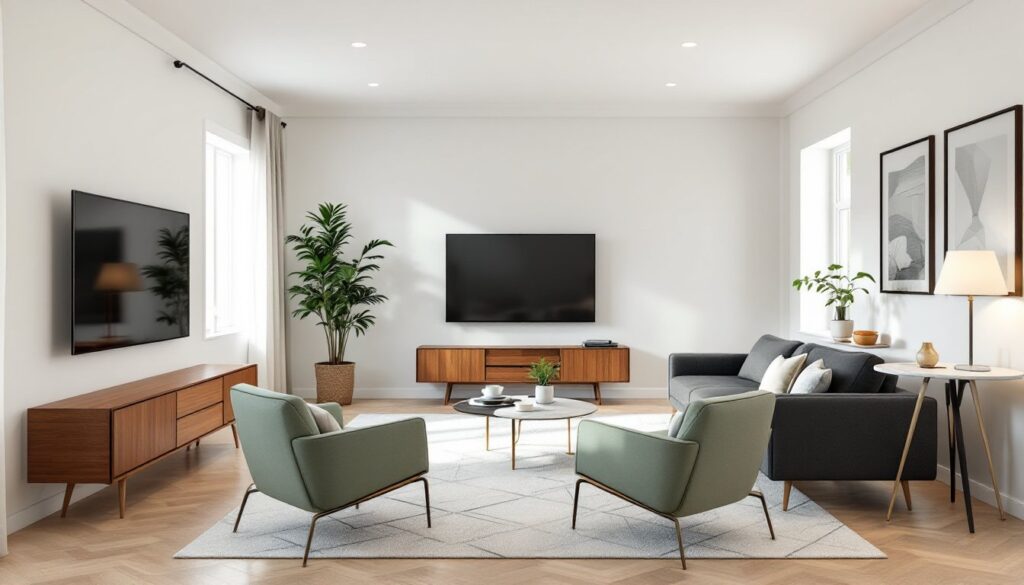
- TV/media zone + conversation area: Primary seating faces the TV: a secondary seating cluster (two chairs, a loveseat) at the opposite end creates a spot for reading or chatting without the TV as a focal point.
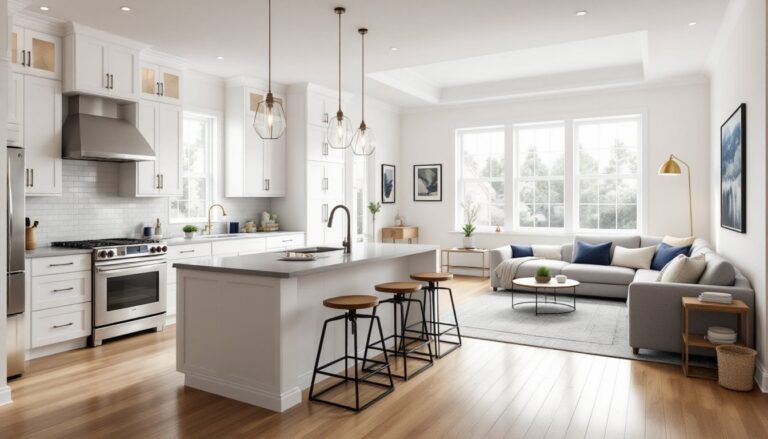
- TV zone + dining nook: If the room opens into the kitchen, define the far end with a small dining table and chairs. This works in open-plan homes where a formal dining room isn’t necessary.
- TV zone + workspace: A desk or console table at the far end creates a home office setup without requiring a separate room.
Use area rugs to visually anchor each zone. A rug under the TV seating should extend at least 6 inches beyond the front legs of the sofa and chairs, typically an 8×10 or 9×12 rug for the main zone. A second, smaller rug (5×7 or 6×9) defines the secondary zone.
Furniture as dividers also works well. A console table or low bookshelf placed perpendicular to the long walls acts as a soft barrier between zones without blocking sight lines or light. Avoid tall, solid pieces like armoires or full-height bookcases, they chop the room into claustrophobic segments.
If the room is particularly long (over 25 feet), consider a back-to-back furniture arrangement. Position a sofa facing the TV, then place a console table or a second sofa back-to-back with it, facing the opposite direction. This creates two distinct zones while keeping traffic flow open along the perimeter.
Furniture Arrangement Strategies to Maximize Flow
Furniture placement in a long rectangular room is all about balance between function and movement. Pushing everything against the walls, a common mistake, actually makes the room feel narrower and more awkward.
Float the primary seating. Pull the sofa and chairs away from the walls by at least 12 to 18 inches. This creates breathing room and makes the seating area feel like an intentional grouping rather than a perimeter lineup. In rooms narrower than 12 feet, you may only be able to float the sofa, but even a few inches helps.
Maintain traffic lanes. The main walkway should be at least 30 inches wide, ideally 36 inches. If your room is 13 feet wide and the sofa is 36 inches deep, floating it leaves about 7 feet of space. Subtract another 18 to 24 inches for a coffee table and chairs, and you’re left with roughly 3 feet for circulation, tight but manageable.
Avoid blocking sightlines. Keep furniture heights varied and intentional. A low-profile sofa (seat height around 17 to 19 inches, back height no more than 32 inches) maintains openness. Tall wingback chairs or high-back sectionals can visually chop the room into segments.
Angle pieces strategically. In wider rectangular rooms (14+ feet), try angling a chair or loveseat at 45 degrees in a corner. This softens the hard edges and makes the layout feel less rigid. Don’t angle everything, that creates chaos, but one or two pieces can add visual interest.
Scale matters. In a room that’s 12 feet wide, an 8-foot sectional is your maximum. Go bigger and you’ll crowd the space. Many homeowners implementing living room layout ideas opt for a standard 3-seat sofa (78 to 84 inches) paired with two accent chairs rather than an oversized sectional.
Coffee table size: Keep it proportional. For a sofa that’s 80 inches long, a coffee table should be roughly 48 to 60 inches long and 18 to 24 inches deep. Leave 14 to 18 inches between the table edge and the sofa for legroom.
Lighting and Visual Tricks to Balance Proportions
Lighting is one of the most overlooked tools for correcting a long rectangular room’s proportions. The right fixtures and placement can visually widen the space, define zones, and reduce the tunnel effect.
Layer your lighting. Relying on a single overhead fixture, especially a centered ceiling light, emphasizes the room’s length. Instead, use three types of lighting:
- Ambient lighting: Recessed cans or a flush-mount fixture in each zone. Avoid a single chandelier centered in the middle of the room: it highlights the awkward shape.
- Task lighting: Table lamps on end tables, floor lamps near reading chairs, and adjustable sconces near the TV. Aim for at least two to three lamps per zone.
- Accent lighting: Picture lights, LED strips behind the TV (reduces eye strain), or uplighting on plants or architectural features.
Use horizontal lines to widen the space. A long, low console table under the TV, horizontal wood paneling or board-and-batten on a short wall, or a floating shelf that spans the width draws the eye across rather than down the length.
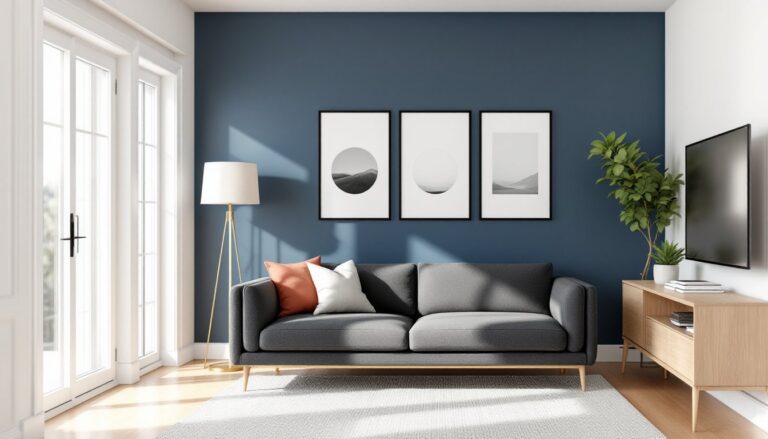
Paint strategy: Keep long walls a lighter, neutral shade and consider painting the short walls a deeper or contrasting color. This visually “pulls in” the ends of the room, making it feel less elongated. Avoid vertical stripes or floor-to-ceiling curtains on long walls, they emphasize height and length.
Mirrors placed strategically on long walls reflect light and create the illusion of width. A large horizontal mirror above a console table or sofa works well. Avoid placing mirrors directly opposite windows on short walls: the reflection can create an uncomfortable infinite hallway effect.
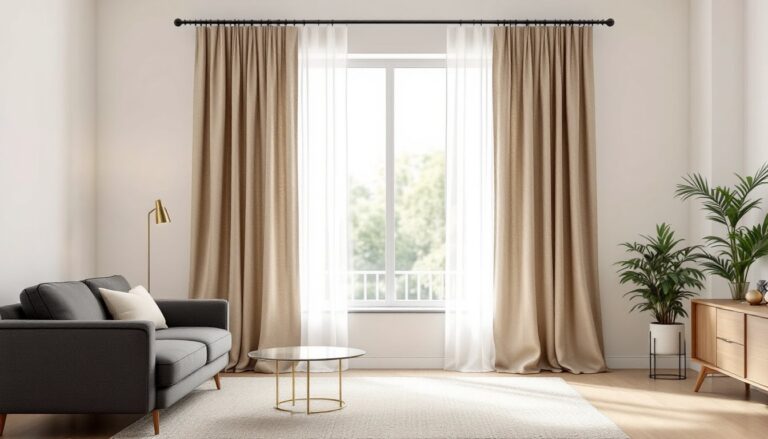
Window treatments: If windows are on the long walls, use curtains or blinds that mount above the window frame and extend several inches beyond the sides. This makes the windows appear larger and draws the eye outward, counteracting the narrow feel. For practical inspiration and decor ideas, interior design resources often showcase how strategic treatments visually alter proportions.
Ceiling treatment: If the ceiling is 9 feet or higher, consider adding visual interest with wood beams running perpendicular to the long walls. This breaks up the visual plane and adds width. Paint the ceiling a shade lighter than the walls to increase the sense of space.