
Modern curtains aren’t just window coverings, they’re architectural elements that define how a living room feels the moment someone walks in. The right design can make ceilings look taller, rooms feel brighter, and outdated spaces suddenly feel current. In 2026, modern curtain trends lean toward clean lines, natural materials, and intentional color choices that complement rather than compete with the rest of the room. Whether tackling a full living room refresh or just swapping out tired drapes, understanding what makes a curtain design “modern” helps narrow down choices and avoid costly mistakes. This guide walks through current styles, fabric selection, and practical installation tips that deliver a polished, contemporary look.
Table of Contents
ToggleKey Takeaways
- Modern curtain designs emphasize clean lines, natural fabrics like linen, and minimal hardware—prioritizing simplicity and function over ornate details.
- Mounting curtain rods 4–6 inches below the ceiling creates the illusion of taller walls and maximizes visual space in any living room.
- Floor-to-ceiling panels in neutral or monochromatic palettes work best for contemporary looks, though one intentional statement element like bold geometry or rich textures can add visual interest without overwhelming the room.
- Proper installation requires precise measurements (8–12 inches beyond the window frame on each side) and quality hardware in matte black, brushed brass, or natural wood finishes for a polished, cohesive appearance.
- Layering sheer and blackout panels on dual-rod systems provides functional light control while maintaining the clean aesthetic that defines modern living room window treatments.
- Test fabric samples in your actual space at different times of day, as natural light dramatically affects how curtain colors and textures read in your room.
What Makes a Curtain Design ‘Modern’?
Modern curtain design prioritizes simplicity, function, and visual breathing room. Unlike traditional styles with heavy swags, tassels, or ornate valances, modern curtains embrace clean lines and minimal hardware. The aesthetic borrows from mid-century and Scandinavian design principles: let the fabric do the work, skip the fuss.
Key characteristics include:
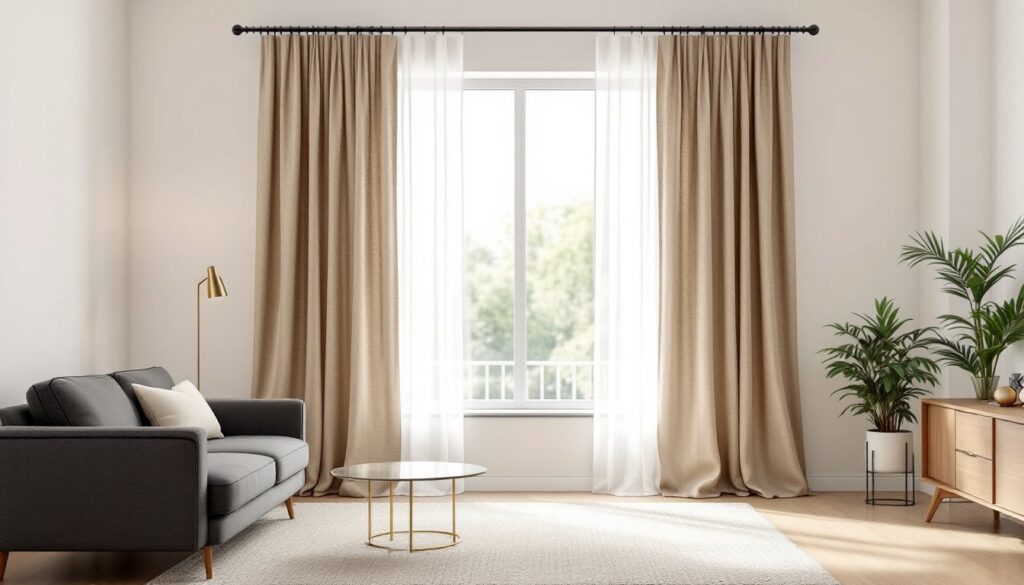
- Floor-to-ceiling panels: Hanging curtain rods close to the ceiling (ideally 4–6 inches below the ceiling line or mounted directly to the ceiling track) creates the illusion of taller walls and more vertical space.
- Neutral or monochromatic palettes: Whites, grays, taupes, and soft earth tones dominate, though bold accent colors work when used intentionally.
- Simple hardware: Matte black, brushed nickel, or natural wood rods with minimal finials. No ornate brackets or fussy tiebacks.
- Functional layering: Pairing sheer panels with blackout liners or using dual-rod systems for light control without sacrificing style.
- Natural and textured fabrics: Linen, cotton blends, and lightweight wools add warmth without the stiffness of polyester or heavy brocades.
Modern doesn’t mean cold or sterile. It’s about intentional choices, choosing one statement element (like a bold color or interesting texture) and letting everything else stay understated. The goal is a curated look that feels effortless, even if the measuring and installation required precision.
Top Modern Curtain Styles to Elevate Your Living Room
Minimalist Sheer and Linen Curtains
Sheer and linen curtains remain the backbone of modern window treatments. Sheer panels in white or off-white diffuse natural light beautifully, softening harsh sun without blocking it entirely. They work especially well in living rooms with southern or western exposure where afternoon glare can be an issue.
Linen curtains, either pure linen or linen-cotton blends, add texture and a slightly relaxed drape that feels organic. Expect some wrinkling: that’s part of the appeal. Linen holds up well in high-traffic areas and gets softer with washing. For a clean look, choose unlined linen panels in neutral tones or go with subtle colorways like sage, charcoal, or warm beige.
Installation tip: Use grommet-top or back-tab panels for easy sliding and minimal bulk at the header. Avoid heavy pleats unless going for a more tailored, upholstered look.
Geometric Patterns and Bold Prints
For those wanting more visual interest, geometric patterns and bold prints offer a modern alternative to traditional florals or damask. Think wide horizontal stripes, abstract line work, or large-scale geometric shapes. These current design trends often incorporate Scandinavian or Japanese-inspired motifs that feel graphic without being busy.
When working with patterned curtains:
- Keep the rest of the room relatively neutral. If the sofa and rug are already patterned, bold curtains can overwhelm the space.
- Scale matters: Large living rooms can handle larger patterns: smaller spaces benefit from smaller, tighter repeats.
- Color count: Stick to two or three colors max within the pattern to maintain a cohesive look.
A pro move: pair a bold printed curtain with a solid blackout liner. This adds function (light control, privacy) without clashing patterns when viewed from outside.
Avoid overly trendy prints unless committed to swapping them out in a few years. Geometric designs in classic color palettes age better than hyper-specific motifs.
Choosing the Right Fabric and Color for a Contemporary Look
Fabric choice impacts both aesthetics and function. Modern curtain fabrics range from breezy sheers to heavyweight blackout materials, and picking the wrong one shows immediately.
Common fabric options:
- Linen and linen blends: Breathable, textured, and naturally wrinkle-prone. Best for living rooms where full blackout isn’t needed. Expect 10–20% shrinkage if washing: many prefer dry cleaning or leaving them unlined and accepting the casual drape.
- Cotton canvas or cotton-poly blends: Affordable, durable, and available in endless colors. Heavier than linen but less prone to wrinkling. Works well for blackout-lined panels.
- Velvet: Makes a comeback in modern spaces when used sparingly. A single velvet panel in deep charcoal or forest green can add warmth without feeling Victorian if the cut stays simple.
- Polyester: Budget-friendly and low-maintenance, but often lacks the drape and texture of natural fibers. Fine for blackout liners: less ideal as the face fabric in a high-end look.
Color selection should tie into the room’s existing palette. In 2026, popular interior design choices lean toward warm neutrals, muted greens, and soft terracotta tones alongside classic whites and grays.
General color rules:
- Light colors (white, cream, light gray) make rooms feel larger and brighter. They show dirt faster, especially near high-traffic patio doors.
- Dark colors (charcoal, navy, black) create drama and provide better light blocking. They can make small rooms feel cozier, or more closed-in, depending on natural light levels.
- Earth tones (taupe, terracotta, olive) add warmth and pair well with wood furniture and natural fiber rugs.
Test fabric samples in the actual room at different times of day. Morning light and evening light can drastically shift how a color reads. And remember: curtain fabric looks different when bunched (open curtains) versus fully extended (closed).
For light control, consider a dual-layer approach: sheer or linen panels on one rod for daytime, blackout panels on a second rod (or sewn-in liner) for privacy and sleeping. This beats compromise fabrics that don’t do either job well.
How to Install and Style Modern Curtains Like a Pro
Proper installation separates a polished look from a DIY disaster. Modern curtains rely on precise measurements and clean hardware placement.
Step-by-step installation:
- Measure the window and wall space. Measure the width of the window casing, then add 8–12 inches on each side for the rod to extend beyond the frame. This allows curtains to stack off the glass when open, maximizing light. For floor-to-ceiling drama, mount the rod 4–6 inches below the ceiling or use a ceiling-mounted track.
- Determine curtain length. Measure from the rod height to the floor, then add ½ inch for a floating hem (modern) or add 1–3 inches for a pooling hem (more traditional, less common in modern spaces). Curtains that hover awkwardly mid-calf look unfinished.
- Choose appropriate hardware. Standard 1-inch or 1⅜-inch diameter rods work for most curtain weights. For heavy velvet or lined panels, go with a 1⅜-inch or thicker rod and use a center support bracket for spans over 60 inches to prevent sagging. Matte black, brushed brass, and natural wood finishes dominate modern installs.
- Locate studs and install brackets. Use a stud finder to locate solid anchoring points. If studs aren’t available where brackets need to go, use toggle bolts or molly anchors rated for the curtain weight (typical panels run 3–8 pounds per panel: check packaging). Mark level bracket positions with a laser level or 4-foot bubble level.
- Hang panels and adjust. Slide panels onto the rod (or clip rings if using a ring-top style). Install rod on brackets, then adjust hem length. If hems need shortening, no-sew hem tape works for quick fixes: for a cleaner finish, machine-stitch or have a tailor hem them.
Styling tips:
- Use the right fullness ratio: Modern curtains typically use 1.5x to 2x fullness (total curtain width = 1.5–2 times the window width). This creates gentle folds without excessive bunching.
- Skip tiebacks unless going for a specific look. Modern curtains usually hang straight or are drawn fully open.
- Match rod finish to other metal accents in the room (light fixtures, furniture legs, picture frames). Consistency keeps the look cohesive.
- Layer textures, not patterns: Pair a solid linen curtain with a nubby throw or leather furniture. Let one element provide the texture.
Safety note: When installing overhead, wear safety glasses to protect from drywall dust and falling hardware. If drilling into brick or concrete (loft apartments, older homes), use a hammer drill with masonry bits and appropriate anchors.
For renters or those avoiding wall holes, tension rods work for lightweight sheers in narrow windows (up to 48 inches). For wider or heavier treatments, command hooks won’t cut it, invest in proper anchors or ask the landlord for permission to install standard hardware. Falling curtain rods damage walls worse than two small screw holes.
When working above furniture, move it out of the way completely or cover with drop cloths. Drilling drywall creates dust that settles everywhere. Common hanging techniques emphasize precision over speed, measure twice, drill once.
Conclusion
Modern curtain design boils down to intentional simplicity: clean lines, quality fabrics, and installation that respects the room’s proportions. Whether choosing airy linen sheers or a bold geometric print, the key is letting the curtains enhance the space rather than dominate it. Take time with measurements, invest in decent hardware, and don’t skip the ceiling-mount trick if looking to add visual height. The difference between okay and polished often comes down to those final six inches of rod placement and a hem that actually touches the floor.