
Planning a shower remodel means facing one big question upfront: what’s this going to cost? The answer isn’t simple, shower projects range from a few hundred dollars for a basic refresh to well over $15,000 for a luxury wet room. The final price depends on scope, materials, labor, and whether any plumbing or structural changes are involved. This guide breaks down real numbers, itemizes the major expense categories, and helps homeowners budget accurately for 2026. No fluff, no vague estimates, just the practical cost details needed to plan a shower remodel that fits both vision and wallet.
Table of Contents
ToggleKey Takeaways
- Shower remodel costs range from $300 for a basic refresh to over $15,000 for luxury installations, with most mid-range projects landing around $6,000 to $8,000.
- Material selection significantly impacts your shower remodel price—ceramic tile runs $5–$15 per square foot while natural stone can exceed $50 per square foot, plus professional installation fees.
- Labor accounts for 40–60% of total costs; hiring licensed professionals is essential for plumbing, waterproofing, and complex tile work to avoid costly damage from improper installation.
- Save money on your shower remodel by keeping the existing plumbing footprint, using affordable field tile with strategic accent pieces, and DIYing demolition work if you have the skills.
- Always prioritize proper waterproofing and permit-compliant plumbing over cost-cutting in structural areas—a missed waterproof membrane or code violation can lead to thousands in mold remediation or fines.
- Get multiple contractor quotes, buy fixtures during sales, and consider the timing of your project, as fall and winter often bring better rates when demand is lower.
Average Shower Remodel Costs by Project Scope
Shower remodel costs vary widely based on scope. A basic refresh, new caulk, grout cleaning, updated fixtures, and a fresh shower curtain, runs $300 to $800. This is pure cosmetic work, no demo required.
A mid-range remodel involves replacing the shower pan, tile surround, and fixtures. Expect to spend $3,000 to $7,500 for a standard 32″ x 60″ alcove shower with ceramic or porcelain tile and mid-tier fixtures. This typically includes professional installation and basic waterproofing.
A high-end custom shower with frameless glass doors, large-format natural stone or designer tile, multiple shower heads, built-in benches, and custom niches can hit $10,000 to $20,000 or more. Add in steam features, digital controls, or body sprays, and the number climbs. Converting a tub to a walk-in shower or expanding the footprint requires additional framing, plumbing relocation, and waterproofing, which pushes costs higher.
According to data from national cost estimators, the average shower remodel lands around $7,000 for most homeowners. Regional labor rates, material availability, and local code requirements all influence the final tab.
What Influences Your Shower Remodel Price?
Material Choices and Their Impact on Cost
Material selection drives a big chunk of the budget. Acrylic or fiberglass surrounds are the most affordable option, typically $400 to $1,200 installed for a standard alcove. They’re lightweight, easy to install, and low-maintenance, but limited in design flexibility.
Ceramic tile runs $5 to $15 per square foot for materials alone, plus labor. It’s durable, water-resistant, and available in endless styles. Porcelain tile costs a bit more, $8 to $20 per square foot, but it’s denser and better for wet areas. Both require proper substrate prep, waterproof membrane (like RedGard or Kerdi), and skilled installation to avoid leaks.
Natural stone (marble, travertine, slate) ranges from $15 to $50+ per square foot and needs regular sealing. Large-format tiles (12″ x 24″ or bigger) reduce grout lines and look sleek, but require flat walls and precise cuts.
Fixtures add up fast. A basic showerhead costs $20 to $80, while a rain head or multi-function system can hit $200 to $600. Frameless glass enclosures run $800 to $2,500, compared to $300 to $800 for a framed door or curtain setup. Valves, trims, and hand showers should be budgeted separately, $150 to $500 depending on brand and finish.
Labor Costs: DIY vs. Professional Installation
Labor typically accounts for 40% to 60% of total project cost. Professional tile installers charge $10 to $25 per square foot depending on complexity, tile type, and region. Plumbers bill $75 to $150 per hour for valve replacement, rough-in work, or fixture installation. In high-cost metro areas, expect the upper end of those ranges.
DIY can cut labor costs significantly, but shower work isn’t beginner-level. Tile setting requires proper thinset mixing, level work, and grout technique. Waterproofing is critical, one missed corner or poorly lapped membrane can lead to mold and structural damage. Plumbing changes often require permits and must meet local codes (IRC P2708 for shower valves, for example). If the project involves moving drain lines or altering framing, hiring a licensed plumber and potentially a contractor is the smarter move.
A DIYer comfortable with tile, familiar with waterproofing systems, and equipped with a wet saw, notched trowels, and grout float can tackle a surround replacement. Valve and drain work? Call a pro unless you’ve got plumbing experience and the proper permits.
Breaking Down the Major Expense Categories
Understanding where money goes helps prioritize spending. Here’s a typical breakdown for a $6,000 mid-range shower remodel:
- Demo and disposal: $300–$600. Removing old tile, shower pan, and hauling debris adds up. Dumpster rental or multiple dump runs factor in.
- Plumbing: $800–$1,500. Includes valve replacement, drain assembly, and any rerouting. Adds more if moving fixtures or upgrading to thermostatic or pressure-balance valves (required by code in most areas).
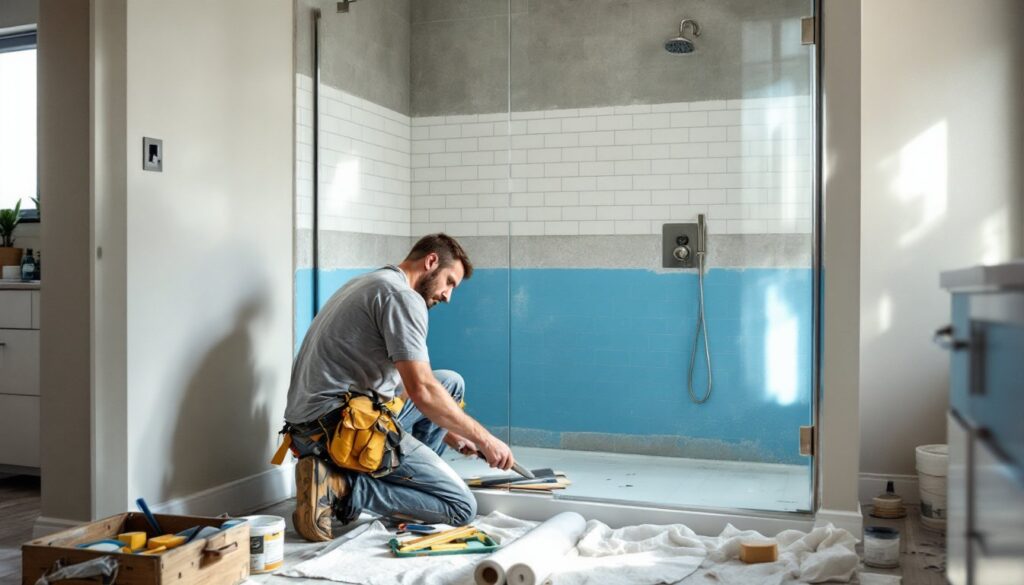
- Waterproofing and substrate: $400–$700. Cement backer board (Durock, HardieBacker) costs $10 to $15 per 3′ x 5′ sheet. Waterproof membrane (sheet or liquid) runs $50 to $150 depending on system and square footage.
- Tile and grout: $1,200–$2,500. Covers wall tile, floor tile (if replacing), thinset, grout, and sealers. Large-format or specialty tiles increase material and labor costs.
- Shower pan or base: $300–$800. Prefab acrylic pans are cheapest. Custom tile pans with mortar beds and linear drains run higher.
- Fixtures and hardware: $400–$1,000. Showerhead, valve trim, tub spout (if combo), hand shower, and mounting brackets.
- Glass enclosure or door: $600–$2,000. Frameless glass looks sharp but costs more. Semi-frameless offers a middle ground.
- Labor: $1,800–$3,000. For tile install, plumbing, and finish work.
Projects requiring structural changes, like removing a tub and extending the shower footprint, add $1,000 to $3,000 in framing, flooring repair, and additional waterproofing. Electrical work for new lighting, exhaust fan upgrades, or heated floors tacks on another $300 to $1,200. Resources like Angi and ImproveNet offer regional cost calculators that can refine these estimates.
Safety note: Always wear eye protection, gloves, and a dust mask during demo. Cutting tile produces silica dust, use a wet saw outdoors or ensure proper ventilation.
How to Save Money on Your Shower Remodel Without Sacrificing Quality
Smart choices trim costs without compromising durability or function. Keep the plumbing footprint. Moving drains or valves significantly increases expense. Work within the existing layout whenever possible.
Choose tile strategically. Use affordable ceramic or porcelain field tile for most of the surround, then add a single accent strip or niche in pricier material. A 4″ x 12″ subway tile at $6 per square foot covers a lot of wall for less than large-format designer tile at $18.
DIY the demo. Ripping out old tile and hauling debris is labor-intensive but doesn’t require specialized skills. Doing this yourself can save $300 to $600. Just be careful around plumbing and electrical.
Buy fixtures during sales. Big-box stores and online retailers run promotions. A quality Delta or Moen valve and trim kit often goes on sale for 20% to 30% off. Avoid ultra-cheap off-brand valves, they’re harder to service and replacement parts can be tough to find.
Use prefab bases and surrounds where appropriate. If the shower is standard size and design flexibility isn’t critical, a solid-surface or acrylic surround installs faster and cheaper than tile. They’re also grout-free, which means less maintenance.
Skip the custom niches and benches if budget is tight. Wall-mounted caddies or corner shelves work fine and cost a fraction. Add them later if desired.
Get multiple quotes. Labor rates vary. Three estimates from licensed, insured contractors help identify fair pricing. Check references and ask to see recent tile work, sloppy grout lines and lippage (uneven tile edges) are red flags.
Timing matters. Contractors are often slower in late fall and winter (outside of warm climates). Booking then may yield better rates or faster scheduling.
Conclusion
Shower remodels range from a few hundred bucks to well into five figures depending on scope, materials, and labor. Mid-range projects cluster around $6,000 to $8,000, delivering solid updates without the luxury price tag. Prioritize waterproofing, don’t skimp on plumbing, and choose materials that balance cost with durability. With clear planning and honest assessment of DIY skills versus professional needs, homeowners can remodel a shower that fits both budget and daily use.