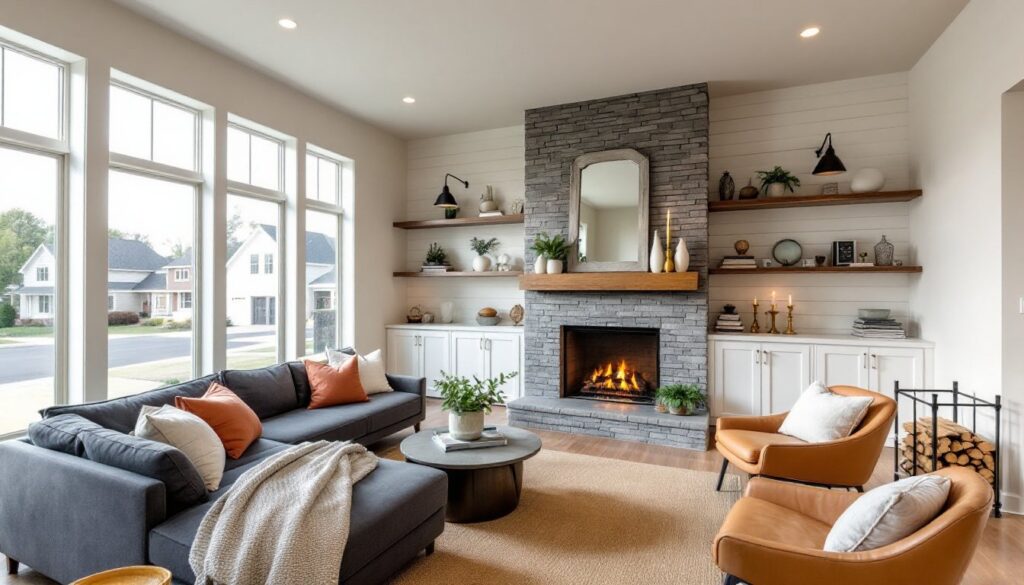

A fireplace changes the entire dynamic of a living room. It’s not just a heat source, it’s the natural anchor that dictates furniture layout, traffic flow, and design choices for the rest of the space. Whether working with a traditional masonry hearth, a zero-clearance gas unit, or a modern electric insert, homeowners face the same core challenge: how to make the fireplace work with the room, not against it. Too often, a great fireplace sits awkwardly in a poorly arranged space, or a builder-grade surround drags down an otherwise well-designed room. The good news? Most fireplace-related design problems come down to fixable decisions about placement, proportion, and materials.
Table of Contents
ToggleKey Takeaways
- Living room ideas with fireplace start with selecting the right style—masonry, zero-clearance, electric, or linear—that matches your home’s architecture and renovation budget.
- Position your sofa 8–10 feet from the hearth at a slight angle, and maintain 30 inches between furniture pieces for optimal traffic flow and comfort in living room designs with fireplace focal points.
- Create visual balance on your mantel using the rule of thirds with odd-numbered groupings of varied heights, and avoid common mistakes like hanging mirrors too high or using decor that’s too small.
- Choose fireplace surround materials wisely—natural stone, tile, and painted brick each offer different aesthetic and durability benefits that should complement your room’s overall color palette.
- Layer your lighting with wall-wash fixtures, flanking sconces, and dimmers to enhance ambiance and prevent the room from feeling dark when the fire isn’t active.
- Incorporate floor-to-ceiling built-ins or bookcases flanking your fireplace to frame the hearth as a cohesive feature wall and increase the room’s storage and visual appeal.
Choose the Right Fireplace Style for Your Living Room
The fireplace itself sets the tone for everything else. Start by understanding what’s already there, or what’s feasible if installing new.
Masonry fireplaces (traditional brick or stone) require a foundation and full chimney chase. They’re permanent, heavy (often 5+ tons), and expensive to add during a remodel unless the home was originally framed for one. If the living room already has a masonry unit, the surround material and mantel style become the main design levers. Painted brick, stone veneer overlays, or a custom wood mantel can modernize a dated hearth without a full rebuild.
Zero-clearance (prefab) fireplaces are metal fireboxes framed into standard 2×4 or 2×6 walls. They’re lighter, cheaper, and easier to install in existing spaces. Most accept gas or wood fuel. The trade-off: they lack the thermal mass and authenticity of masonry. For design purposes, zero-clearance units offer more flexibility in surround materials, tile, stone, shiplap, or even steel panels work as long as clearances per the manufacturer’s specs are maintained.
Electric and ethanol units require no venting and can go almost anywhere with adequate electrical or ventilation. They’re ideal for condos, apartments, or rooms where a chimney isn’t feasible. The flame effect has improved significantly: mid-range models now include adjustable LED flames and infrared heat. But, they won’t pass code as a primary heat source in cold climates and lack the ambiance of real combustion.
Linear (contemporary) fireplaces have become standard in modern builds. These wide, shallow units, often 48″ to 72″ across and only 12″ to 18″ tall, suit open-plan spaces. They pair well with flush-mount surrounds in concrete, porcelain slab, or blackened steel. If retrofitting a traditional firebox opening into a linear profile, expect significant framing and hearth modifications.
Match the fireplace style to the room’s architecture. A Craftsman-style home calls for natural stone or tile with a substantial wood mantel. Mid-century spaces work well with clean brick, terrazzo, or painted surrounds with minimal trim. Contemporary interiors often benefit from floor-to-ceiling stone or tile with no mantel at all, just a floating shelf or recessed niche.
Arrange Furniture to Maximize Comfort and Flow
Furniture placement around a fireplace isn’t about symmetry for its own sake, it’s about sightlines, heat distribution, and traffic patterns.
Start with the primary seating piece (usually a sofa) facing the fireplace directly or at a slight angle. Position it 8 to 10 feet from the hearth. Closer feels cramped: farther dilutes the focal point. If the room also has a TV, decide which element takes priority. Mounting the TV above the mantel is common but ergonomically poor, viewing angles above 15° cause neck strain during extended use. A better approach: place the TV on an adjacent wall and angle seating to address both the fireplace and screen, or use a pull-down mount that lowers the TV to proper height when in use.
Flanking chairs or loveseats should sit perpendicular or angled inward to create a conversation zone. Leave at least 30 inches between furniture pieces for walkability. If the fireplace is on an exterior wall, keep furniture a few inches off the wall to allow air circulation behind cushions, cold walls cause condensation and mildew in heating season.
Avoid blocking the hearth with a coffee table placed too close. Maintain 18 to 24 inches of clearance between the table edge and seating. If the fireplace is operational, keep all upholstered furniture and wood pieces at least 36 inches from the firebox opening (check local fire code: some jurisdictions require 48 inches).
In narrow living rooms, a parallel arrangement works better than a U-shape. Place the sofa along one long wall and a pair of chairs along the opposite wall, with the fireplace at one short end. This maintains a clear path through the room and prevents a bottleneck.
For corner fireplaces, angle the sofa and chairs to face the hearth at 45°. Use an area rug to define the seating zone and visually separate it from adjacent spaces. Corner units are tricky, they often create dead zones in the room layout. Adding a small side table or floor lamp in the unused corner behind the firebox can balance the arrangement.
Create a Focal Point with Mantel Decor and Styling
A mantel is functional (it’s code-required for many wood-burning fireplaces as a combustible barrier), but its main job is visual balance. Overstuffed mantels look cluttered: bare mantels look unfinished. The sweet spot depends on the mantel’s size and the room’s style.
Scale matters. A standard mantel shelf is 5 to 7 inches deep and 48 to 60 inches wide. Decor pieces should vary in height, cluster items in odd numbers (three or five objects work better than two or four). Use a large anchor piece (mirror, artwork, or oversized object) centered or offset, then layer in smaller items. Leaning a large framed mirror or piece of art on the mantel instead of hanging it adds casual depth and makes swapping decor easier.
Designers often use the rule of thirds for mantel styling concepts: divide the mantel into three zones and vary the visual weight across them. For example, stack books and a small plant on the left, a tall vase in the center, and a pair of candlesticks on the right.
Avoid these common mistakes:
- Hanging a mirror or art too high. The bottom edge of a centered piece should sit 4 to 6 inches above the mantel shelf.
- Using decor that’s too small. Tiny objects disappear from across the room. Go bigger than feels comfortable, especially with mirrors and frames.
- Matching everything. Symmetry works for formal spaces, but slight asymmetry feels more livable.
If the mantel is shallow or nonexistent, treat the wall above the firebox as the focal zone. A floor-to-ceiling tile surround, a large-scale piece of art, or floating shelves flanking the fireplace give the eye something to land on without a traditional mantel.
Seasonal swaps keep the space feeling fresh. Greenery and candles work year-round. Swap in branches, pinecones, or lanterns in fall: evergreen and metallics in winter: light textiles and flowers in spring and summer. Avoid anything that sheds heavily near an active firebox, dried flowers and loose glitter near an open flame are a fire hazard.
Select Colors and Materials That Complement Your Fireplace
The fireplace surround is a permanent finish, or at least semipermanent, so material and color choices have lasting impact.
Natural stone (stacked ledgestone, slate, marble, or granite) adds texture and mass. Full-height stone surrounds work well in rustic, transitional, and modern spaces depending on the stone type and finish. Fieldstone and stacked slate skew traditional: honed marble or large-format granite slabs read contemporary. Stone is heavy, confirm that floor joists are rated for the load, especially on second stories. Typical stone veneer adds 10 to 15 pounds per square foot.
Tile offers the widest range of looks. Subway tile, zellige, terracotta, and encaustic patterns suit traditional and farmhouse interiors. Large-format porcelain slabs (available up to 5×10 feet with minimal grout lines) create seamless modern surrounds. Use heat-resistant thinset and grout rated for high-heat areas (check for ANSI A118.3 or A118.4 compliance). Standard wall adhesive can fail near an active firebox.
Painted brick or drywall is the budget option. If painting existing brick, use a high-heat masonry primer followed by 100% acrylic latex paint. Limewash is popular for a matte, textured finish but requires reapplication every few years. Drywall surrounds need a non-combustible backer (cement board or equivalent) within the clearances specified by the fireplace manufacturer, typically 6 inches on sides, 12 inches above the firebox opening for zero-clearance units.
Wood mantels and surrounds must meet code clearances. The International Residential Code (IRC) generally requires wood trim to be at least 6 inches from the firebox sides and 12 inches from the top for factory-built units: masonry units have different rules based on the firebox depth. Many jurisdictions allow closer placement if the wood is backed by a non-combustible material. Verify local amendments, some areas are stricter.
Color-wise, the fireplace doesn’t have to match the wall color, but it should relate to the room’s overall palette. A white-painted brick fireplace lightens a dark room but shows soot stains in active wood-burning setups. Charcoal, black, and deep gray surrounds hide ash and wear better. Warm wood tones and earthy stone pair well with neutral walls and natural textiles. High-contrast surrounds (black tile in a white room, white marble in a dark room) make bold statements but require commitment, these aren’t easy to reverse.
Add Lighting to Enhance the Fireplace Ambiance
Even with a working fireplace, layered lighting prevents the room from feeling like a cave when the fire’s out. Lighting also highlights the fireplace surround and mantel decor after dark.
Recessed cans or track lights aimed at the fireplace wall add wash lighting that emphasizes texture, especially useful with stone or tile. Position fixtures 24 to 36 inches out from the wall and use narrow flood bulbs (25° to 40° beam spread). Avoid placing recessed lights directly above a wood-burning firebox: heat and soot discolor trims and reduce lamp life.
Sconces flanking the fireplace provide symmetrical task and accent lighting. Mount them 60 to 66 inches above the finished floor (standard switch height is 48 inches, so sconces sit comfortably above). Hardwiring requires cutting into drywall and running cable to a switch box, doable in open walls during a remodel, trickier in finished rooms. Plug-in sconces with cord covers are a simpler retrofit.
Picture lights or LED strips can highlight a large piece of art or mirror above the mantel. Battery-operated LED strips stick to the back of frames for a floating glow. Hardwired picture lights offer cleaner lines but need an electrical box behind the artwork.
Table and floor lamps in the seating area soften overhead lighting and create zones. A tall arc floor lamp behind a sofa can reach over and light the mantel without taking up surface space. Pair warm-toned bulbs (2700K to 3000K) with the fireplace’s glow, cool daylight bulbs (5000K+) clash with flame light and make the room feel sterile.
Dimmers are non-negotiable. Install dimmers on all overhead and sconce circuits so lighting can be dialed down when the fire’s going. A room lit at full brightness with a roaring fire feels visually confused, the fireplace loses impact.
If the fireplace is the only architectural feature on its wall, use lighting to create the illusion of depth. Wall-washing or grazing techniques with adjustable track heads can make a flat surround feel more dimensional. Many home styling resources emphasize that lighting is as critical as furniture in defining a room’s character.
Incorporate Built-Ins and Storage Solutions
Built-in shelving or cabinetry flanking a fireplace adds function and frames the hearth as a cohesive feature wall. It’s also one of the higher-ROI cosmetic upgrades in a living room, buyers consistently rank built-ins as desirable.
Floor-to-ceiling built-ins work best in rooms with 8-foot or taller ceilings. Standard bookcase depth is 10 to 12 inches: deeper shelves (14 to 16 inches) accommodate larger books and decor but eat into the room. If the fireplace is centered on the wall, symmetrical built-ins on each side create balance. Asymmetrical layouts (shelving on one side, a media console or closed cabinets on the other) suit eclectic or modern spaces.
Materials matter. MDF or poplar painted to match trim is the most cost-effective approach. Hardwood (oak, maple, walnut) stains beautifully but costs significantly more. For a DIY build, assemble the cases from ¾-inch plywood with face frames and trim, then scribe them to the wall and ceiling for a custom look. Pre-made modular systems (IKEA, Closetmaid, EasyClosets) offer faster installs but limited customization.
Fireplace bump-outs (built-in cabinetry below and shelving above) are common in new construction. If adding them in a remodel, confirm wall framing and electrical placement first. Running power inside a cabinet for device charging or accent lighting requires a receptacle box, don’t rely on extension cords fished through the back.
Open vs. closed storage: Open shelves display books and decor but collect dust. Cabinets with doors hide clutter and house electronics, board games, or firewood. A mix, lower cabinets with upper open shelves, offers both. Include adjustable shelf pins so spacing can change as needs evolve.
Styling built-ins follows similar rules as mantels: vary height, use odd groupings, and leave some negative space. Overstuffed shelves look chaotic. Aim for about 70% full, enough to feel curated, not crammed. Integrate task lighting (LED puck lights or tape) inside upper shelves to highlight objects and add ambient glow.
If built-ins aren’t in the budget, freestanding bookcases or étagères on either side of the fireplace achieve a similar effect for less. Anchor them to the wall with L-brackets to prevent tipping, especially important in homes with kids or pets. Many fireplace decor examples show how even simple shelving can transform a plain hearth into a curated feature wall.
Conclusion
A fireplace doesn’t automatically make a living room work, but intentional choices around style, layout, and materials do. Focus on proportion and code compliance before aesthetics, and remember that the best fireplace designs feel like they’ve always been part of the room. Most fixes don’t require a full remodel, just a clearer plan and a willingness to rearrange what’s already there.