
Mirrors aren’t just functional, they’re one of the most versatile tools in a homeowner’s design arsenal. They bounce light, create depth, and can make a cramped room feel twice its size. But hanging a single mirror over the mantel doesn’t scratch the surface of what’s possible. From gallery walls with mixed shapes to dramatic oversized pieces, mirror wall decor ideas have evolved into a full-blown design category. Whether you’re tackling a living room refresh or adding dimension to a hallway, the right mirror arrangement can completely shift how a space feels. Here’s how to choose, hang, and style mirrors like you know what you’re doing.
Table of Contents
ToggleKey Takeaways
- Mirror wall decor ideas leverage light reflection and spatial tricks to make rooms feel larger, brighter, and more visually interesting without structural renovations.
- Gallery walls with mixed mirror shapes require 2-4 inches of spacing and at least one larger 18-24 inch anchor mirror to ground the composition effectively.
- Oversized statement mirrors (36+ inches) work best when hung at average eye level (57-60 inches from the floor) and should occupy two-thirds to three-quarters of the furniture width below them.
- Proper installation is critical: use heavy-duty mirror clips or French cleats for oversized pieces, toggle bolts rated for weight on drywall, and always locate studs with a stud finder for maximum safety.
- Geometric mirror clusters and hexagonal arrangements are trending in 2026 as modern alternatives, while ornate antique mirrors add timeless elegance through careful sourcing and frame restoration.
Why Mirrors Are a Designer’s Secret Weapon for Wall Decor
Mirrors solve problems that paint and furniture can’t touch. A well-placed mirror reflects both natural and artificial light, effectively doubling the brightness in dim corners or north-facing rooms. This isn’t decorative theory, it’s physics.
They also manipulate perception. A narrow hallway feels wider with a horizontal mirror on the long wall. A low-ceilinged room gains vertical interest with a tall, lean mirror. Designers use this trick constantly because it works without construction or permits.
Unlike art, mirrors interact with their surroundings. They reflect views, colors, and movement, which means the “image” changes throughout the day. Position one across from a window, and you’re pulling outdoor scenery into the room. Aim it at a textured accent wall or a piece of furniture you’re proud of, and you’re amplifying what’s already working.
Mirrors also layer well with other wall decor. You can mix them into a gallery wall alongside framed prints, floating shelves, or even textile art. The reflective surface breaks up visual monotony and adds a literal new dimension to flat wall compositions.
Gallery Wall of Mixed Mirror Shapes
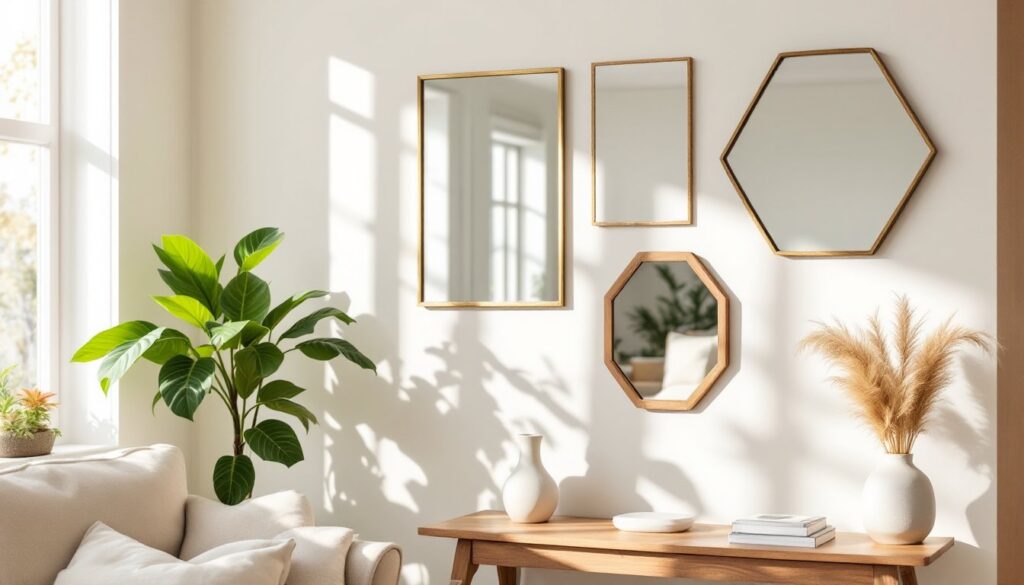
A gallery wall of mirrors works like a traditional photo wall, but with more light play and spatial trickery. The key is variety: round, rectangular, oval, and irregular shapes arranged in a loose grid or organic cluster.
Planning the layout: Before you drill anything, tape out the arrangement on the floor or use painter’s tape on the wall to mark each mirror’s footprint. Aim for 2–4 inches of space between pieces. Too tight, and it looks cluttered: too loose, and the grouping loses cohesion.
Frame consistency vs. contrast: You can unify mismatched mirrors with a single frame color (all black, all gold, all natural wood), or lean into eclectic variety. If you go eclectic, keep at least one element consistent, frame thickness, finish style, or mirror shape palette.
Hanging hardware: Most lightweight mirrors (under 10 lbs) can hang on standard picture hangers or D-rings with drywall anchors. For heavier pieces, locate studs with a stud finder and use wood screws directly into framing. If you’re mixing weights, use a level and measure from a consistent baseline (like the ceiling line) to keep things visually aligned even if they’re asymmetrical.
Mirror wall ideas living room: In living rooms, position the gallery wall opposite seating or above a console table. The reflection should capture the room’s best angles, a fireplace, architectural detail, or a view through the windows. Avoid placing it where it reflects clutter or blank walls.
One pro tip: use at least one larger “anchor” mirror (18–24 inches) to ground the composition, then build out with smaller pieces. This prevents the wall from looking like a scattered collection of compact mirrors.
Oversized Statement Mirrors for Dramatic Impact
An oversized mirror, anything 36 inches or larger, commands attention and can serve as the focal point of an entire wall. This approach works especially well in spaces that lack architectural interest: flat walls in rental apartments, builder-grade rooms, or open-concept areas that need definition.
Choosing size and orientation: For wall mirror decor ideas in living rooms, a floor-leaning mirror (60–72 inches tall) adds verticality without drilling. Just make sure it’s secured with furniture straps or L-brackets if you have kids or pets. Wall-mounted oversized mirrors should occupy roughly two-thirds to three-quarters the width of the furniture below them (like a sofa or sideboard) to maintain proportion.
Installation considerations: Large mirrors are heavy. A 48-inch round mirror can weigh 30–50 lbs, depending on the glass thickness and frame material. You’ll need to hang it on studs using heavy-duty mirror clips, French cleats, or a combination of D-rings and toggle bolts. If studs aren’t where you need them, toggle bolts rated for the mirror’s weight can work on drywall, but err on the side of over-engineering the mount.
Frame styles: A chunky wooden frame adds warmth and suits farmhouse or transitional interiors. Thin metal frames (brass, black steel, or brushed nickel) lean modern or industrial. Frameless beveled mirrors deliver a clean, minimalist look and won’t compete with busy wallpaper or bold paint colors.
Placement tips: Hang the mirror so its center is at average eye level (roughly 57–60 inches from the floor). In dining rooms, position it to reflect light from a chandelier or pendant. In entryways, place it opposite the door so guests catch themselves on arrival, it’s both functional and welcoming.
Many interior design resources emphasize using oversized mirrors to anchor open floor plans, especially in lofts or studio apartments where walls are scarce.
Sunburst and Starburst Mirrors for Vintage Charm
Sunburst mirrors, those mid-century fixtures with radiating spokes or rays, bring instant retro appeal. They peaked in the 1960s and have cycled back into style thanks to a renewed interest in vintage and maximalist decor.
Material and finish options: Traditional sunburst mirrors feature gold or brass-tone metal rays, but you’ll also find versions in black metal, weathered wood, or even rattan. The mirror itself is usually small (8–12 inches in diameter), with the “sunburst” extending the overall diameter to 24–36 inches.
Where to use them: These work well as accent pieces rather than primary mirrors. Hang one above a bar cart, in a powder room, or as part of a larger wall arrangement. Because the design is busy, keep surrounding decor simple to avoid visual overload.
DIY customization: If you’re handy, you can build a sunburst mirror using a round mirror tile, wooden dowels, and spray paint. Cut dowels to varying lengths, sand the ends, arrange them in a spoke pattern on a plywood backer, glue them down, spray the whole assembly, and mount the mirror in the center with construction adhesive. It’s a weekend project that costs less than buying a finished piece.
Hanging: Most sunburst mirrors are lightweight. Use a sawtooth hanger or a single wall anchor rated for the weight. If the design is three-dimensional (protruding spokes), make sure it’s mounted flush to avoid tipping.
For vintage charm with modern function, pair a sunburst mirror with clean-lined furniture. The contrast keeps it from feeling like a period room.
Geometric and Hexagonal Mirror Clusters
Geometric mirror clusters, especially hexagons and diamond shapes, create a honeycomb or tessellated effect that’s both modern and eye-catching. This style has gained traction in 2026 as homeowners look for alternatives to traditional rectangular mirrors.
Cluster kits vs. custom arrangements: Many retailers sell hexagonal mirror sets (often 7–12 pieces) designed to fit together with minimal gaps. These kits usually include adhesive strips or small mounting tabs. Custom arrangements let you control spacing and orientation but require more planning.
Layout strategy: Start by mapping the design on the floor. Arrange mirrors in a symmetrical pattern (like a centered hexagon with surrounding pieces) or an asymmetrical drift. Measure and mark the wall with painter’s tape or a pencil to guide placement.
Mounting methods: Lightweight acrylic or thin glass hexagons (under 1 lb each) can be mounted with double-sided foam tape or adhesive mirror tabs. For heavier glass, use mirror clips or small picture hangers. If you’re renting, removable adhesive strips work but won’t support much weight, keep each piece under 8 oz.
Design balance: Geometric clusters can look chaotic if overdone. Limit the cluster to one wall per room, and surround it with negative space. Avoid placing it on a wall that already has busy wallpaper or a lot of shelving.
Some DIY mirror decorating ideas involve painting the back of acrylic mirror tiles in contrasting colors, then arranging them so the color peeks through in geometric patterns, a nice twist if you want customization without professional help.
Antique and Ornate Frame Mirrors for Classic Elegance
Ornate mirrors, think carved wood, gilded finishes, and Baroque or Rococo details, bring old-world elegance and visual weight. They’re especially effective in formal dining rooms, entryways, and traditional living rooms.
Sourcing antique mirrors: Thrift stores, estate sales, and online marketplaces are goldmines for vintage mirrors. Look for solid wood frames with hand-carved details. Check the mirror glass for silvering damage (dark spots where the backing has deteriorated). Minor silvering adds character: extensive damage means you’ll need to have the mirror resilvered or replaced, which can cost $100–$300 depending on size.
Frame restoration: If the frame’s finish is worn, you can refinish it. Strip old varnish with a chemical stripper, sand lightly with 220-grit sandpaper, then apply wood stain and polyurethane for a natural look, or use spray paint and gold leaf wax for a gilded effect. Protect the mirror glass with painter’s tape during finishing.
Hanging heavy ornate mirrors: Antique mirrors with thick wooden frames can weigh 40–60 lbs or more. Use a French cleat system for the most secure mount, one cleat screws into studs on the wall, the other attaches to the back of the mirror, and they interlock. This distributes weight evenly and makes leveling easier.
Styling: Pair an ornate mirror with simpler furniture to let it shine. In a dining room, hang it above a sideboard or buffet. In an entryway, center it above a console table with minimal accessories, maybe a single vase or a pair of candlesticks.
Home decor guides often recommend using ornate mirrors as a counterpoint to minimalist or Scandinavian interiors, creating a curated, layered look that feels collected over time rather than bought all at once.
Conclusion
Mirror wall decor ideas range from simple single statements to intricate multi-piece installations, but they all leverage the same principles: light, reflection, and spatial manipulation. Whether you’re clustering geometric shapes, leaning an oversized mirror, or restoring a gilded antique, the key is intentional placement and solid mounting hardware. Measure twice, use the right anchors, and don’t skip the level. Your walls, and your room’s perceived square footage, will thank you.