
Long, narrow living rooms are common in older homes, apartments, and condos, and they’re notoriously tricky to arrange. The space can feel like a bowling alley if furniture clings to the walls, and sightlines often get awkward. But with the right layout strategy, even a 10′ × 20′ room can feel comfortable, functional, and visually balanced. The key is to stop treating the room like one long corridor and start breaking it into intentional zones. This guide walks through proven tactics, zone definition, furniture placement, visual tricks, and lighting, that make narrow living rooms work harder and look better.
Table of Contents
ToggleKey Takeaways
- A long narrow living room layout works best when divided into intentional zones using area rugs, low bookcases, or console tables rather than pushing all furniture against the walls.
- Angling seating perpendicular to long walls and floating furniture 12–18 inches away creates visual breathing room and breaks up the corridor effect that makes narrow rooms feel like bowling alleys.
- Horizontal visual elements like stripe patterns, wide curtain rods, and mirrors on long walls draw the eye across the width and make the space feel wider and more balanced.
- Layered lighting from multiple sources at different heights—including track lighting, floor lamps, and wall sconces—distributes light evenly and prevents the tunnel-like proportions of narrow living rooms.
- Maintain clear traffic flow by keeping walkways 30–36 inches wide and positioning focal points like TVs to the side rather than across the center to avoid bisecting seating areas.
Understanding the Challenges of Long Narrow Living Rooms
A room that’s more than twice as long as it is wide creates several problems. Traffic flow defaults to a central path, which turns the room into a hallway with furniture pushed to the sides. Conversation zones feel stretched, forcing people to shout across the length. And visually, the walls close in, emphasizing the tunnel effect.
Standard furniture arrangements don’t translate well here. A sofa against one long wall with a TV on the opposite side wastes the entire middle of the room and reinforces the corridor vibe. End zones, areas near doorways or windows, often become dead space because they’re too far from the action.
The good news: narrow rooms respond well to deliberate zoning and furniture angles. Instead of fighting the proportions, the goal is to create multiple focal points and interrupt long sightlines. Think of it as subdividing one awkward room into two or three smaller, functional areas that each serve a purpose.
Define Zones to Create Functional Areas
Breaking the room into distinct zones is the most effective way to combat the bowling alley effect. Typical zone combinations include a seating/conversation area, a reading nook, a workspace, or a dining spot. Each zone gets its own furniture cluster and purpose, which visually shortens the room.
Use area rugs to anchor each zone. A 5′ × 8′ or 6′ × 9′ rug under the main seating group and a smaller 4′ × 6′ rug under a reading chair or desk creates clear boundaries without walls. Make sure front furniture legs sit on the rug, floating all legs off looks disconnected.
Open shelving units, low bookcases (30″ to 36″ tall), or a sofa table can act as physical dividers between zones. These elements define space without blocking light or sightlines the way a solid wall would. A narrow console table placed behind a sofa, for instance, separates the seating zone from a workspace behind it while adding surface area for lamps or decor.
Many homeowners have found inspiration for small space living ideas that translate well to narrow living rooms. Vertical dividers like a bookshelf or a pair of tall plants also help interrupt the length and give the eye stopping points along the room.
Furniture Arrangement Strategies That Work
The instinct is to shove everything against the walls to “maximize space,” but that backfires in a narrow room. Instead, arrange furniture to create intimate groupings and break up long walls.
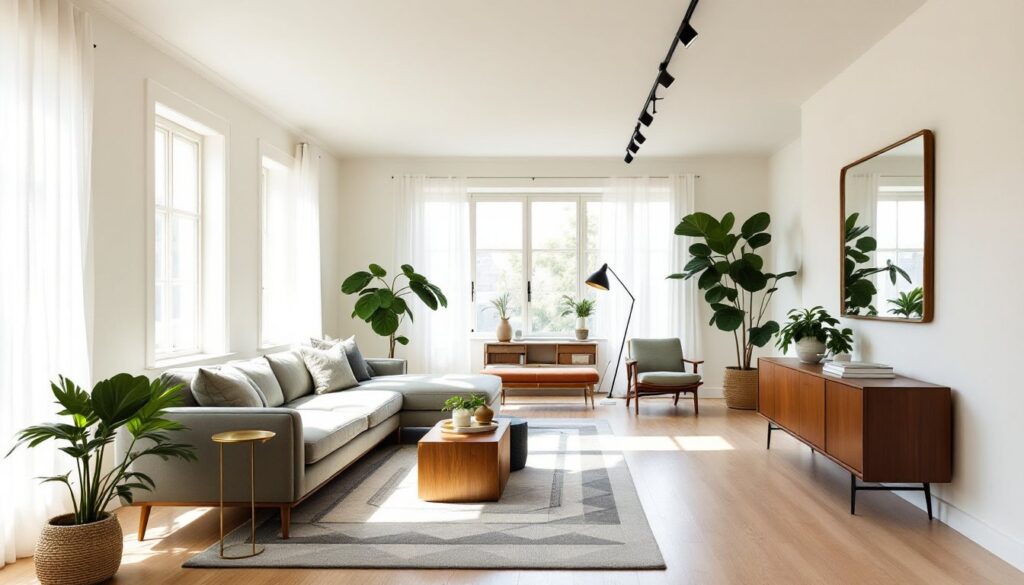
Angle seating or use an L-shaped layout. Position a sofa perpendicular to the long wall, not parallel. This cuts across the width and makes the room feel less linear. Pair it with two armchairs or a loveseat at a right angle to form a conversation square. Leave 18″ to 24″ of clearance between seating pieces for easy movement.
Use furniture with exposed legs. Pieces that sit on legs (rather than skirts that touch the floor) let light and sightlines pass underneath, which makes the room feel less crowded. Mid-century modern and Scandinavian styles work well here.
Keep scale in check. A giant sectional eats up floor space and emphasizes the narrowness. Opt for a standard 72″ to 84″ sofa rather than an oversized model. Armless chairs and benches also reduce visual bulk.
Floating Furniture Away from Walls
Pulling furniture 12″ to 18″ away from the long walls is one of the simplest tricks to make a narrow room feel wider. This creates a margin of negative space that the eye reads as breathing room. It also allows for floor lamps, side tables, or plants behind seating, which adds depth.
Float the sofa in the middle of the room with a sofa table or low console behind it. This arrangement creates a walkway along the walls and a defined seating zone in the center. If the room has windows on a short wall, orient seating to face them, it draws the eye across the width instead of down the length.
Avoid lining up all furniture in a single row. Stagger pieces at slight angles or vary their distances from the wall to create rhythm and visual interest.
Visual Tricks to Make Your Space Feel Wider
Paint and pattern can shift how the eye perceives proportion. Horizontal stripes or wide planks on an accent wall draw the eye across the width. If painting, consider a darker color on the short end walls and a lighter tone on the long walls, this pulls the ends in and pushes the sides out visually.
Mirrors are classic for expanding space. Mount a large mirror (or a gallery of smaller mirrors) on one long wall to reflect light and create the illusion of depth. Position it opposite a window if possible to bounce natural light.
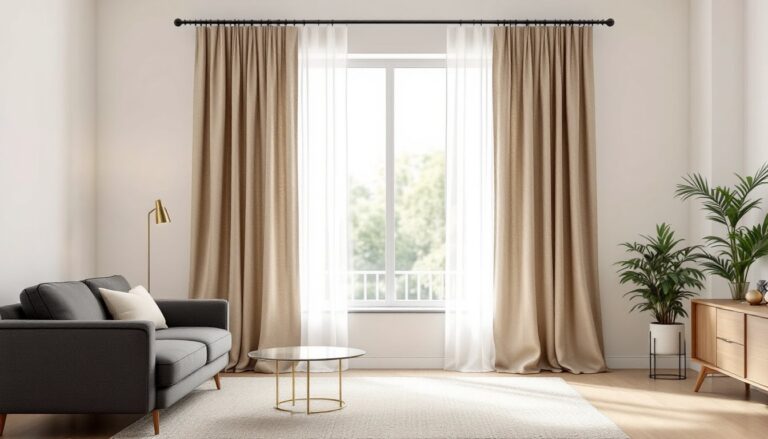
Curtains and drapery should hang as high and wide as the architecture allows. Mount rods 4″ to 6″ above the window trim and extend them 6″ to 12″ beyond the frame on each side. This makes windows appear larger and draws the eye upward, which counters the narrow proportions.
For design inspiration and professional layouts, browsing examples on home design platforms can clarify what works in real-world narrow spaces. Limit tall, heavy furniture along the long walls, vertical elements emphasize height and make the room feel even more tunnel-like.
Traffic Flow and Movement Considerations
Narrow rooms often double as thoroughfares, especially if doorways sit at opposite ends. The main traffic path should run along one side, not straight down the center, so it doesn’t bisect your seating area.
Maintain a 30″ to 36″ clearance for walkways. This is the minimum comfortable width for one person to pass without turning sideways. If the room serves as a hallway, keep that path clear and unobstructed by furniture legs or rug edges.
Position the TV or focal point to one side of the traffic lane, not across it. If the TV sits on the short end wall, arrange seating in an L or U shape that leaves one side open for movement. Avoid placing a coffee table in the direct path, use nesting tables or a narrow 14″ to 16″ deep bench instead, which can tuck under or slide aside.
Corner spaces are often wasted in narrow rooms. A corner chair, floor lamp, or tall plant turns dead zones into functional elements and prevents the room from feeling like a one-dimensional hallway.
Lighting Solutions for Long Narrow Spaces
Single overhead fixtures create harsh shadows and don’t address the room’s length. Layered lighting, ambient, task, and accent, distributes light evenly and makes the space feel more expansive.
Use multiple light sources at different heights. Combine a ceiling fixture or track lighting with floor lamps, table lamps, and wall sconces. Aim for at least three separate light sources in the main seating zone and two in secondary areas.
Track lighting or recessed cans spaced along the length of the ceiling can wash the long walls with light, which visually pushes them outward. Install 3 to 4 recessed lights on a dimmer to adjust intensity. Space them 4′ to 6′ apart for even coverage.
Wall sconces flanking a sofa or on both short walls add width-focused illumination without eating floor space. Choose fixtures with adjustable arms or swing-arm designs for task lighting in reading nooks.
Skip the single central chandelier unless the ceiling is high (9′ or more). In standard 8′ ceiling rooms, a flush-mount or semi-flush fixture keeps the proportions balanced. Many renovation and decorating ideas, including lighting layouts, are showcased on design and lifestyle networks that cater to real-world challenges. Use warm white bulbs (2700K to 3000K) to create a cozy atmosphere, cooler tones can make narrow spaces feel stark.