
Indoor air quality matters more than most homeowners realize. The EPA estimates indoor air can be two to five times more polluted than outdoor air, filled with VOCs from paint, formaldehyde from furniture, and particulates from everyday activities. While mechanical air purifiers tackle these contaminants effectively, living air purifiers, strategically placed houseplants, offer a complementary, natural approach that works quietly in the background. They’re not a replacement for HEPA filtration in high-risk environments, but for everyday air quality maintenance, the right plants can reduce airborne toxins, boost humidity, and improve your home’s atmosphere without filters to replace or electricity to monitor.
Table of Contents
ToggleKey Takeaways
- A living air purifier uses houseplants to naturally absorb VOCs and airborne toxins through foliar absorption, root-zone filtration, and microbial degradation—offering a complementary, noise-free alternative to mechanical HEPA systems.
- Top air-purifying plants like snake plant, pothos, peace lily, and spider plant target specific pollutants; snake plants excel at formaldehyde removal, while pothos handles xylene, making species diversity key for broader coverage.
- For measurable air quality improvement, aim for approximately 1 medium plant per 100 square feet of floor space, strategically placed in high-traffic areas, near pollutant sources, and away from heating or cooling vents.
- Living air purifiers require minimal maintenance—consistent watering, appropriate light exposure, monthly leaf dusting, and occasional repotting—while supporting beneficial root-zone bacteria that break down household pollutants.
- While plants work slower than mechanical purifiers and shouldn’t replace HEPA filters in high-allergen homes, they provide long-term, low-energy air conditioning by reducing VOCs, boosting humidity, and improving indoor atmosphere without electricity or filter replacements.
What Is a Living Air Purifier?
A living air purifier refers to indoor plants that naturally filter airborne pollutants through their leaves, roots, and soil microbiomes. Unlike mechanical systems that rely on fans and filters, plants use photosynthesis and microbial processes to absorb volatile organic compounds (VOCs) like benzene, formaldehyde, and trichloroethylene, common offgassers from building materials, furniture, and household cleaners.
NASA’s Clean Air Study in the 1980s first demonstrated this phenomenon, testing plants in sealed chambers to see which species pulled specific toxins from the air. While those lab conditions don’t perfectly replicate a drafty home with open windows, the underlying biology holds up: plant stomata (tiny pores on leaves) take in gases, and root-zone bacteria break down organic pollutants into harmless byproducts.
Living air purifiers won’t replace a HEPA filter in a workshop or a home with severe allergies, but they excel at passive, long-term air conditioning. They also add humidity through transpiration, useful in dry climates or homes with forced-air heating. The key is scale: one potted snake plant won’t transform a 2,000-square-foot house, but a dozen well-placed specimens across living areas can make a measurable difference in air freshness and particulate reduction.
How Plants Naturally Filter Indoor Air
Plants clean air through three main pathways: foliar absorption, root-zone filtration, and microbial degradation. Understanding these mechanisms helps DIYers choose the right species and optimize placement.
Foliar absorption happens when leaf stomata open to take in carbon dioxide for photosynthesis. During this gas exchange, plants also absorb small amounts of airborne VOCs. Formaldehyde, benzene, and xylene molecules diffuse into leaf tissue, where enzymes break them down or incorporate them into plant metabolism. Broad-leafed species with high stomatal density, like pothos and peace lilies, tend to be more efficient at this.
Root-zone filtration is less obvious but equally important. Soil microbes in the root zone metabolize organic pollutants that settle into the potting mix or are transported there by the plant. Studies show that potting media with active microbial populations can degrade toluene and other hydrocarbons over time. This is why healthy, well-aerated soil matters, compacted, waterlogged dirt won’t support the beneficial bacteria that do the heavy lifting.
Transpiration indirectly improves air quality by increasing humidity, which helps airborne dust and particles settle faster. Plants release water vapor through stomata, raising indoor relative humidity by a few percentage points. In winter months when forced-air heating dries things out, this can reduce respiratory irritation and static buildup.
It’s worth noting that plants work slowly compared to the best air purifiers with activated carbon and HEPA stages. A mechanical unit will clear smoke or pollen in minutes: plants operate on a timescale of hours to days. But they’re silent, require no electricity, and improve aesthetics alongside air quality.
Best Indoor Plants for Air Purification
Not all houseplants pull equal weight when it comes to air scrubbing. The most effective species combine high transpiration rates, robust root systems, and tolerance for indoor light and humidity fluctuations.
Snake plant (Sansevieria trifasciata) is a workhorse for VOC removal, particularly formaldehyde and benzene. It tolerates low light and irregular watering, making it ideal for bedrooms and basements. Snake plants also perform CAM photosynthesis, opening stomata at night, useful for overnight air exchange.
Pothos (Epipremnum aureum) excels at removing formaldehyde and xylene. It’s a vigorous grower that thrives in indirect light and humid conditions, perfect for bathrooms or kitchens. Pothos is also forgiving of neglect: just water when the top inch of soil dries out.
Peace lily (Spathiphyllum spp.) ranked high in NASA’s testing for acetone, benzene, and trichloroethylene removal. It prefers medium light and consistent moisture, and the white blooms add a decorative bonus. Note: peace lilies are toxic to cats and dogs if ingested, keep them out of reach.
Spider plant (Chlorophytum comosum) handles formaldehyde and carbon monoxide well and produces offshoots (spiderettes) that root easily, letting you propagate free replacements. It’s nearly unkillable and adapts to a wide range of light conditions.
Rubber plant (Ficus elastica) has large, waxy leaves that pull in formaldehyde and release oxygen at a high rate. It needs bright, indirect light and moderate watering. Rubber plants can grow tall, up to 8 feet indoors, so plan for space or prune regularly.
Low-Maintenance Options for Beginners
If you’re new to houseplants or short on time, these species deliver air-cleaning benefits with minimal fuss:
- ZZ plant (Zamioculcas zamiifolia): Thrives in low light, tolerates drought, and removes xylene and toluene. Water every 2–3 weeks.
- Dracaena varieties (Dracaena marginata, Dracaena fragrans): Slow-growing and tolerant of neglect. They filter benzene, formaldehyde, and trichloroethylene. Keep soil lightly moist.
- Aloe vera: Pulls formaldehyde and benzene while producing medicinal gel. Needs bright, indirect light and infrequent watering, let soil dry completely between waterings.
All of these are available at most garden centers in 4-inch to 10-inch pots for $10–$40 depending on size and maturity. Start with smaller specimens if budget is tight: they’ll fill out over a season or two with proper care.
Setting Up Your Living Air Purifier System at Home
Creating an effective living air purifier system is more than scattering pots around the house. Strategic placement, proper potting, and attention to environmental factors make the difference between thriving plants and decorative dust collectors.
Start with the right containers. Use pots with drainage holes, waterlogged roots can’t support the microbial activity needed for pollutant breakdown. Ceramic or terracotta pots wick moisture away from roots better than plastic, reducing risk of root rot. Match pot diameter to plant size: a mature pothos in an 8-inch pot, a desktop snake plant in a 4-inch starter.
Choose quality potting mix. Skip garden soil, which compacts indoors and drains poorly. Use a commercial houseplant mix or blend your own with 2 parts peat or coco coir, 1 part perlite, and 1 part compost. This gives roots the aeration they need and supports beneficial bacteria.
Scale your collection to room size. Research from the 2019 Journal of Exposure Science & Environmental Epidemiology suggests 1 medium plant (6-inch pot) per 100 square feet of floor space for measurable VOC reduction. A 200-square-foot bedroom benefits from at least two plants: a 400-square-foot living room might need four to six. This isn’t a hard rule, more plants mean more filtration, but it’s a practical baseline.
Combine species for broader coverage. Different plants target different pollutants, so diversify your lineup. Pair a pothos (formaldehyde) with a spider plant (carbon monoxide) and a peace lily (benzene) to cover common household VOCs.
If you’re comparing options, comprehensive air purifier reviews often highlight models with multi-stage filtration for heavy-duty needs, but plants complement mechanical systems by handling background pollutant levels without noise or energy draw.
Placement Tips for Maximum Air Quality Benefits
Where you put plants affects how well they clean the air. Follow these guidelines:
- High-traffic areas first: Living rooms, kitchens, and home offices accumulate more airborne pollutants from cooking, cleaning products, and electronics. Cluster 2–3 plants in these spaces.
- Near pollutant sources: Place a snake plant or pothos near new furniture, which offgasses formaldehyde for months. Position a rubber plant by a laser printer or copier to capture ozone and VOCs.
- Bedroom placement: Plants that perform CAM photosynthesis (snake plant, aloe) release oxygen at night, making them bedroom-friendly. Avoid overwatering to prevent mold growth in sleeping areas.
- Avoid forced-air vents: Direct heat or AC drafts stress plants and reduce transpiration efficiency. Keep pots at least 3 feet from registers.
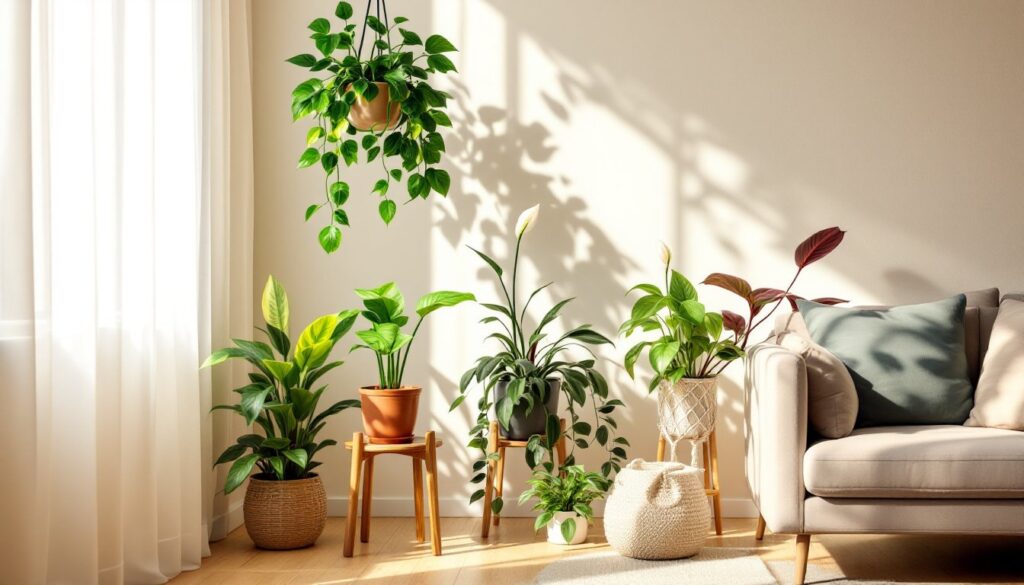
- Vertical layering: Use plant stands or hanging planters to distribute foliage at multiple heights. This increases surface area for air contact and takes advantage of natural convection currents.
Rotate plants every few weeks so all sides get even light exposure, which keeps growth balanced and maintains healthy stomatal function.
Caring for Your Air-Purifying Plants
Plants are low-maintenance compared to expert-reviewed mechanical purifiers, but they still need consistent care to function as effective air filters.
Watering: Most air-purifying species prefer soil that dries slightly between waterings. Stick your finger 1–2 inches into the soil: if it’s dry, water until it drains from the bottom of the pot. Discard excess water from saucers to prevent root rot. In winter, reduce watering frequency by about 30% as plant growth slows.
Light requirements: Match species to available light. Snake plants and ZZ plants handle low light (north-facing windows or rooms with only artificial light). Pothos and spider plants thrive in medium, indirect light (east- or west-facing windows). Rubber plants and peace lilies need bright, indirect light (south-facing windows with sheer curtains).
Humidity: Most tropical air purifiers (pothos, peace lily, spider plant) appreciate 40–60% relative humidity. If indoor air is dry, mist leaves weekly or set pots on trays filled with pebbles and water (bottom of pot above water level). Grouping plants also raises local humidity through collective transpiration.
Fertilizing: Feed with diluted liquid houseplant fertilizer (half-strength 10-10-10 NPK) every 4–6 weeks during growing season (spring and summer). Skip fertilizing in fall and winter. Over-fertilizing causes salt buildup in soil, which damages roots and reduces filtration efficiency.
Dust management: Dust on leaves blocks stomata and reduces gas exchange. Wipe large leaves with a damp cloth monthly. For smaller-leafed plants like spider plant, rinse foliage under a lukewarm shower every few weeks.
Pest control: Common houseplant pests (spider mites, aphids, fungus gnats) weaken plants and reduce air-cleaning capacity. Inspect leaves regularly. Treat infestations with insecticidal soap or neem oil spray, following label directions. Always wear gloves and work in a ventilated area when applying pesticides.
Repotting: When roots start circling the pot or growing through drainage holes, it’s time to size up. Repot in spring, moving to a container 1–2 inches larger in diameter. Fresh potting mix restores nutrients and supports root-zone microbial activity.
Safety note: Many air-purifying plants are toxic if ingested. Peace lily, pothos, snake plant, and ZZ plant contain calcium oxalate crystals that cause irritation. Keep them out of reach of children and pets, or choose non-toxic alternatives like spider plant or Boston fern.
With proper care, a well-chosen collection of air-purifying plants can quietly improve indoor air quality for years, complementing mechanical systems or standing alone in spaces where a quiet, energy-free solution makes sense. They won’t replace a HEPA filter in a high-allergen home, but for everyday VOC management and humidity control, they’re a practical, living investment.