
A narrow living room isn’t a design flaw, it’s a puzzle that needs the right pieces. Many homeowners inherit these long, skinny spaces and default to lining furniture against the walls like a bowling alley. That rarely works. The trick is treating a narrow room less like one big box and more like a series of connected zones. With deliberate furniture placement, smart visual tricks, and a clear understanding of traffic flow, a cramped-feeling space transforms into something functional and inviting. This guide walks through seven practical strategies to make any narrow living room work harder without major renovation.
Table of Contents
ToggleKey Takeaways
- A narrow living room layout works best when you float furniture away from walls and divide the space into distinct functional zones rather than pushing everything to the perimeter.
- Choose shallow-profile sofas (30-34 inches deep) and round tables over standard deep seating and rectangular pieces to maintain clear traffic flow and reduce the tunnel effect.
- Paint short walls a darker shade, incorporate horizontal lines, and use mirrors and layered lighting to visually widen the space and counteract the elongated feel.
- Measure your room thoroughly before purchasing furniture, accounting for doorways, radiators, ceiling height, and the actual depth of each piece to avoid costly layout mistakes.
- Avoid common narrow living room pitfalls like blocking walkways, overloading with small clutter, ignoring scale, and skipping properly-sized rugs that anchor seating areas.
- Create a primary seating zone with an area rug and a secondary function zone at the opposite end—like a reading nook or workspace—to make the room feel purposeful and intentional.
Why Narrow Living Rooms Need Special Layout Considerations
Standard living room advice doesn’t translate well to narrow spaces. Most layout tips assume a room with roughly equal dimensions, say, 14 by 16 feet. But narrow rooms, often 10 feet wide or less and stretching 20+ feet long, create unique challenges.
First, traffic flow becomes a problem. People need a clear path through the room without squeezing between furniture or disrupting someone seated. A narrow layout amplifies this issue because there’s less wiggle room for circulation.
Second, proportion gets thrown off. Standard-depth sofas (36 to 40 inches deep) eat up half the width of a 10-foot room, leaving little space for a coffee table or walkway. The room starts to feel like a hallway rather than a gathering spot.
Third, sightlines matter more. In a wide room, you can anchor furniture around multiple focal points. In a narrow room, eyes naturally track the length of the space, which can make it feel tunnel-like if not handled carefully. Design choices need to counteract that pull and create visual interest across the width.
Measure First: Understanding Your Narrow Living Room Dimensions
Before moving a single piece of furniture, measure the room accurately. Use a 25-foot tape measure and record:
- Overall length and width (measure at multiple points since older homes aren’t always square)
- Window and door locations, including swing direction for doors
- Ceiling height (helps determine if vertical design strategies will work)
- Radiator, outlet, and switch placement (these limit furniture positioning)
- Any alcoves, built-ins, or architectural quirks
Draw a simple floor plan on graph paper, using a scale of 1 square = 1 foot. Mark fixed elements first. Then measure existing furniture, especially depth, since that’s the dimension that kills narrow rooms.
A standard sofa runs 36 to 40 inches deep. A coffee table adds another 18 to 24 inches. Factor in 30 to 36 inches for a walkway, and you’ve used 84 to 100 inches (7 to 8.3 feet) of width. If the room is only 10 feet wide, that leaves 20 to 36 inches on the other side, not enough for much.
Measuring first prevents expensive mistakes. It’s easier to shuffle paper cutouts of furniture than to haul a sectional up three flights of stairs only to find it blocks the doorway.
Furniture Arrangement Strategies for Long, Narrow Spaces
Float the Sofa
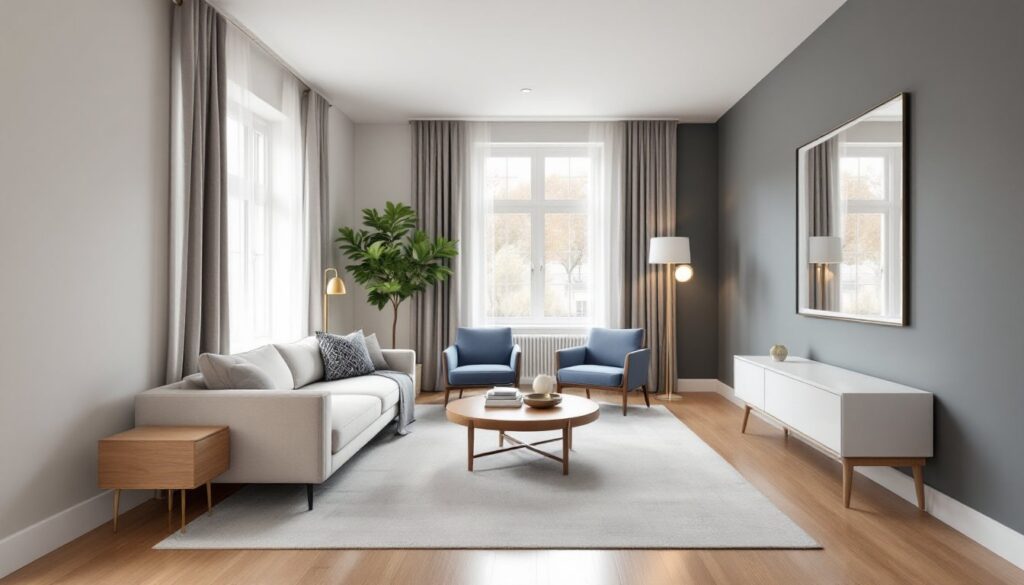
Pulling the sofa a few feet off the longest wall creates breathing room and defines a seating zone. It sounds counterintuitive in a narrow space, but it works. Position the sofa perpendicular or at a slight angle to the long walls, leaving a 12-to-18-inch gap behind it for a console table or floor lamp. This breaks up the tunnel effect and makes the room feel wider.
Choose Shallow-Profile Furniture
Swap deep seating for pieces with shallower dimensions. Look for sofas and chairs with 30-to-34-inch depths instead of standard 38-inch models. Armless chairs and benches also work well because they don’t add bulk. A pair of slipper chairs flanking a narrow console takes up less visual and physical space than a bulky armchair.
Use Round or Oval Coffee Tables
Rectangular tables emphasize the length of a narrow room. Round or oval coffee tables soften the space and improve traffic flow since there are no sharp corners to navigate. Keep diameter under 36 inches to maintain walkway clearance. Nesting tables or a pair of small side tables offer flexibility without hogging space.
Skip the Oversized Sectional
Sectionals dominate narrow rooms and limit layout flexibility. A standard sofa with one or two accent chairs offers similar seating without the visual weight. If a sectional is non-negotiable, choose a compact L-shape and position it at one end of the room rather than stretching it along the length.
Creating Zones to Break Up a Narrow Living Room
Dividing a narrow living room into distinct zones prevents the bowling-alley effect. Instead of one long, undefined space, create two or three functional areas.
Define a Primary Seating Area
Anchor the main conversation zone with a sofa, two chairs, and a coffee table or ottoman. Use an area rug to define the footprint, typically 8 by 10 feet or 9 by 12 feet, depending on room size. The rug visually ties furniture together and signals where the seating area begins and ends.
Add a Secondary Function
At the opposite end of the room, create a secondary zone: a reading nook with a chair and floor lamp, a small workspace with a wall-mounted desk or floating shelf, or a console table styled as a bar or display area. This gives the room purpose beyond just seating and makes the length feel intentional rather than awkward.
Use Furniture as Dividers
A narrow bookshelf, open-back console, or low credenza placed perpendicular to the wall can act as a subtle room divider. It separates zones without blocking light or sightlines. Avoid tall, solid dividers, they chop up the space and make it feel smaller. Professional designers on Houzz often use this technique to add function without sacrificing openness.
Visual Tricks to Make Narrow Living Rooms Feel Wider
Paint Strategy
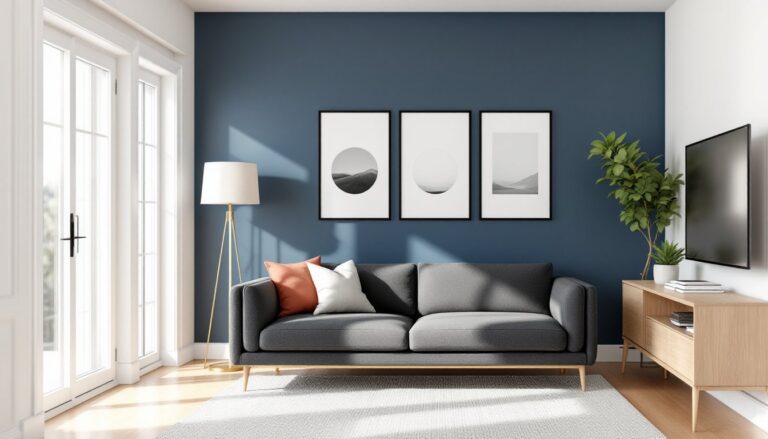
Paint the two short walls a slightly darker or more saturated color than the long walls. This visually pulls the end walls forward, making the room feel less stretched. Alternatively, paint all walls the same light, neutral tone and use an accent color on trim or ceiling to draw the eye upward, adding perceived height.
Horizontal Lines and Stripes
Incorporate horizontal elements, wide-plank flooring, horizontal shiplap, or striped rugs, to emphasize width. Avoid vertical stripes or tall, narrow artwork, which make the room feel taller and skinnier.
Mirrors and Reflective Surfaces
Place a large mirror on one of the long walls to reflect light and create the illusion of depth. Leaning a floor mirror against the wall at the end of the room also adds dimension. Glass or acrylic furniture (coffee tables, side tables) keeps sightlines open and reduces visual clutter.
Lighting Layers
Overhead lighting alone flattens a narrow room. Add table lamps, floor lamps, and wall sconces at varying heights to create depth and draw attention across the width. Use dimmers to adjust ambiance. Wall-mounted swing-arm lamps save floor space and provide task lighting without adding furniture.
Curtain Placement
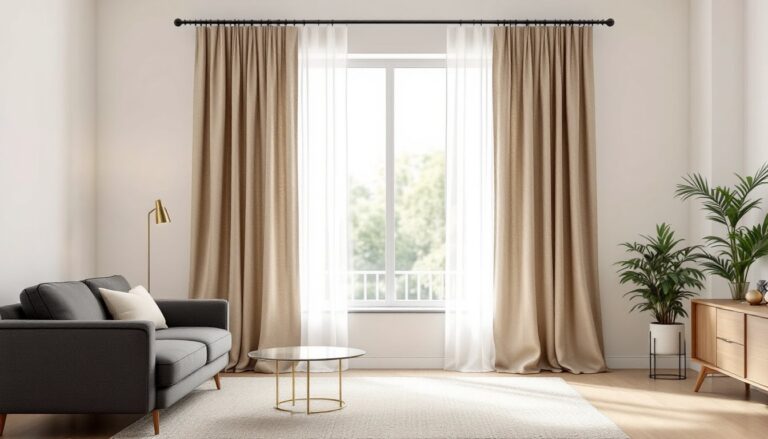
Hang curtain rods wider than the window frame, 6 to 12 inches on each side, and mount them close to the ceiling. This makes windows appear larger and ceilings higher. Choose light, flowing fabrics rather than heavy drapes that shrink the space.
Common Narrow Living Room Layout Mistakes to Avoid
Pushing All Furniture Against the Walls
This is the default move in a narrow room, but it backfires. It creates a gap down the center that feels empty and emphasizes the room’s length. Floating furniture away from walls, even by a foot or two, makes the layout feel more intentional.
Blocking Traffic Flow
Leave at least 30 inches of clearance for walkways. If someone has to turn sideways to pass between the sofa and coffee table, the layout doesn’t work. Map out the primary path through the room and keep it clear. Homeowners looking for ideas on small space living often overlook this basic rule.
Using Too Many Small Pieces
A room full of small furniture looks cluttered and disjointed. Instead, choose fewer, appropriately scaled pieces. One sofa and two chairs beats four mismatched small chairs.
Ignoring Scale and Proportion
Oversized art, bulky entertainment centers, and floor-to-ceiling bookcases overwhelm a narrow room. Stick to low-profile storage (under 60 inches tall), and choose wall-mounted shelves or a slim media console instead of a chunky TV stand.
Overloading with Patterns and Colors
Busy patterns and too many colors fragment the space. Stick to a cohesive palette, two or three main colors plus neutrals, and limit bold patterns to accents like throw pillows or a single rug. Design experts on MyDomaine recommend keeping the base palette neutral and layering in texture for visual interest without chaos.
Skipping the Rug or Choosing the Wrong Size
A too-small rug makes furniture look disconnected. Aim for a rug large enough that at least the front legs of all seating pieces rest on it. In a narrow room, this might mean a 6-by-9-foot or 8-by-10-foot rug rather than a tiny accent rug that floats in the middle of the space.
Conclusion
A narrow living room layout isn’t about fighting the space, it’s about working with it. Measure carefully, choose furniture that fits the footprint, and use zoning and visual tricks to break up the length. Most failures come from defaulting to standard advice that doesn’t account for tight dimensions. Get the proportions right, and a narrow room becomes functional, comfortable, and surprisingly livable.