
Sunken living rooms, those recessed seating areas that sit a few steps below the main floor, dominated 1960s and ’70s home design before falling out of favor. Now they’re back, and for good reason. They create distinct zones without walls, add architectural drama, and turn any gathering into an intimate event. But before you start swinging a sledgehammer, understand that dropping a floor isn’t a weekend cosmetic project. It involves structural modifications, potential code compliance issues, and careful planning. This guide walks through what makes a sunken living room work, the design considerations you can’t skip, and practical layout ideas to make the most of this bold architectural feature.
Table of Contents
ToggleKey Takeaways
- Sunken living room ideas require structural engineering consultation and building permits, as they involve floor joist modifications, potential load-bearing wall changes, and code compliance—not a weekend DIY project.
- Code-compliant steps must have risers no taller than 7.75 inches and treads at least 10 inches deep, with handrails required for three or more steps and edge lighting essential for safety.
- Two modern sunken living room design approaches are cozy conversation pits with built-in seating and open-plan integrated areas that define zones without walls while maintaining sight lines.
- Low-profile furniture, strategic lighting with dimmers, and area rugs that unify the recessed floor create the ideal aesthetic for a sunken living room without making the space feel cramped.
- Edge protection through contrasting materials, LED strip lighting, and handrails serve dual purposes—meeting safety codes while adding intentional, sophisticated design details to the space.
What Is a Sunken Living Room and Why Is It Making a Comeback?
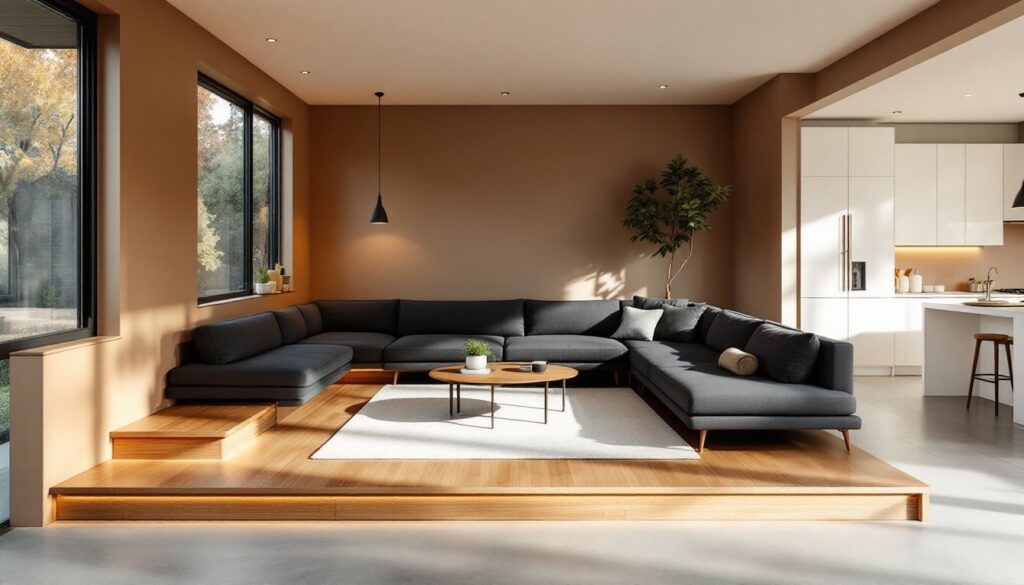
A sunken living room is a recessed seating area set 12 to 18 inches below the surrounding floor level, typically accessed by one to three steps. The drop creates a defined boundary without physical walls, making it ideal for open-plan homes where you want separation without sacrificing sightlines.
The original appeal in mid-century modern homes was both aesthetic and functional. Builders used the recess to hide ductwork or create visual interest in ranch-style layouts. The design fell out of fashion by the 1990s, blamed for tripping hazards and accessibility concerns, but it’s experiencing a resurgence as homeowners seek unique architectural details that mass-market construction doesn’t offer.
Today’s versions lean into the cozy, conversation-pit vibe while addressing safety with better lighting, handrails, and code-compliant step dimensions. Modern materials like poured concrete, engineered hardwood, and low-profile LED strips make the feature more adaptable to contemporary interiors. When done right, a sunken living room becomes the anchor of a home’s social layout, pulling people into a space that feels intentionally designed for gathering.
Key Design Considerations Before Creating a Sunken Living Room
Creating a sunken living room isn’t cosmetic work, it’s a structural modification that affects floor joists, potentially load-bearing walls, and drainage if you’re on a concrete slab. Start by consulting a structural engineer or architect to assess feasibility. Homes with crawl spaces or basements are easier candidates than slab-on-grade construction, where you’ll need to saw-cut concrete and potentially reroute plumbing or electrical lines embedded in the slab.
Floor joist modifications are the biggest challenge. Standard residential floor framing uses 2×10 or 2×12 joists spaced 16 inches on center. Dropping the floor means cutting and reframing joists, installing new support beams, and ensuring the modified structure meets live load requirements (typically 40 pounds per square foot for residential floors per the International Residential Code). You may need to double up joists or add steel beams depending on span.
Permits are required for this type of work in most jurisdictions. Expect inspections at the framing stage and again after finishes. Budget time and money for engineering drawings, most building departments won’t issue permits without them.
Accessibility is another factor. Sunken rooms create barriers for anyone using mobility aids or navigating in dim light. If aging-in-place is part of your long-term plan, weigh this carefully. Some homeowners future-proof by designing removable platform inserts that can level the floor later if needed.
Structural Requirements and Safety Features
Code-compliant steps are non-negotiable. The IRC specifies maximum riser height of 7.75 inches and minimum tread depth of 10 inches. For a 12- to 18-inch drop, you’ll need one or two steps. Anything three steps or more triggers handrail requirements, 34 to 38 inches high on at least one side.
Edge protection matters. Integrate contrasting materials or lighting at the step edge to reduce tripping. Recessed LED strip lights along the top riser or under the nosing are popular and effective. Avoid thick rugs or runners that mask the step edge, hard transitions are safer.
Drainage and moisture control come into play if you’re working with a slab. Any recessed area can collect water if there’s a leak or condensation issue, so proper waterproofing and a slight slope toward a floor drain (if code allows) can prevent future headaches. In crawl space or basement applications, make sure rim joists and subfloor are protected with vapor barriers and that HVAC registers are repositioned to maintain airflow.
HVAC and electrical adjustments are often overlooked. Lowering the floor may block existing ductwork or outlets. Plan for relocating registers and adding outlets at the new floor level, the NEC requires receptacles within six feet of any point along a wall in living spaces.
Modern Sunken Living Room Styles and Layout Ideas
Once the structural work is done, the fun part begins: designing a layout that maximizes the unique character of a sunken space. Two main approaches dominate contemporary projects, intimate conversation pits and open-plan integrated seating.
Cozy Conversation Pit Designs
The classic conversation pit is a fully enclosed sunken area, often square or circular, with built-in seating on three or four sides and a central coffee table or fire feature. This layout works best in homes with dedicated formal living rooms or large basements where the pit becomes the focal point.
Built-in seating is the signature move. Frame bench seating with 2×4 or 2×6 lumber, add plywood tops, then finish with upholstered cushions. Standard bench depth is 18 to 24 inches with seat height around 18 inches from the sunken floor. Many designers specify high-density foam cushions wrapped in durable upholstery fabric or leather for longevity.
Materials like concrete, stone, or reclaimed wood for the step risers and surrounding edges add texture. Interior designers often layer soft textiles and low-profile furniture to enhance the cozy, den-like feel without overwhelming the space.
Lighting is critical. Recessed ceiling fixtures, pendant lights hung low over the center, or perimeter cove lighting all work. Avoid floor lamps, they clutter sightlines and create tripping hazards. Dimmers let you shift the mood from bright task lighting to ambient evening glow.
Fire features (gas or ethanol tabletop units) are popular centerpieces, but check local codes. Any open flame requires ventilation and clearance from combustibles. For a safer alternative, consider a recessed electric fireplace built into one wall of the pit.
Open-Plan Sunken Seating Areas
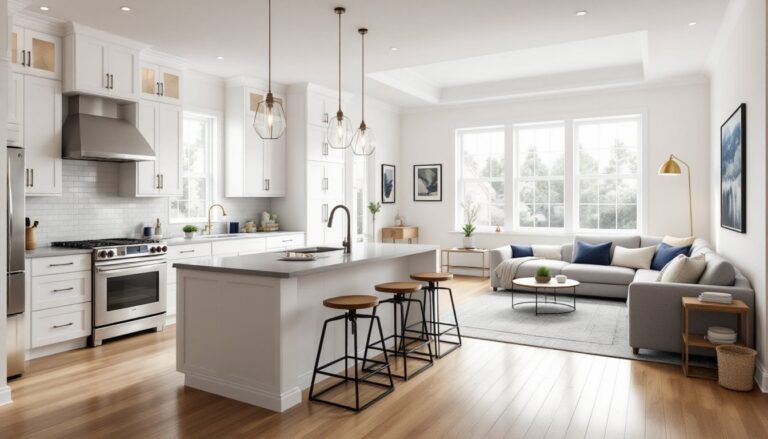
In open-concept homes, the sunken area defines the living zone without closing it off from the kitchen or dining areas. This approach maintains flow and sightlines while creating a subtle boundary.
Step placement matters. Position steps on one or two sides rather than surrounding the entire perimeter. This keeps traffic patterns intuitive and allows furniture to float along open edges. For example, place the step on the side facing the entry and leave the back and sides flush with adjacent rooms for visual continuity.
Flooring transitions help distinguish the sunken area. Switching from hardwood on the main level to area rugs, tile, or polished concrete in the recessed zone reinforces the separation. Design guides often recommend using contrasting textures to define different functional zones in open layouts.
Furniture arrangement should respect the step edge. Avoid placing sofa backs directly against the top of the step, anyone walking by will bump into it. Instead, orient seating inward or parallel to the step, and leave at least 36 inches of clearance for walking paths.
Integrated storage is a smart use of vertical space. Build low shelving or media cabinets into the walls bordering the sunken area. The step-down creates a natural soffit that can house AV equipment, books, or decorative objects without interrupting the room’s flow.
For homes with young kids or frequent entertaining, consider a modular approach: freestanding sectionals and ottomans that can be rearranged rather than permanent built-ins. This flexibility is especially useful in apartment-style layouts where adaptability matters.
Decorating and Furnishing Your Sunken Living Room
Furnishing a sunken living room follows the same principles as any other space, scale, proportion, and function, but the recessed floor changes how pieces interact with the room’s sightlines and boundaries.
Low-profile furniture works best. Since the floor is already dropped, tall bookcases or high-back sofas can make the space feel like a pit instead of a stylish recess. Opt for mid-century modern pieces, platform sofas, or low-slung sectionals that emphasize horizontal lines. Seat heights around 16 to 18 inches align well with the lowered perspective.
Rugs and textiles anchor the space. A large area rug that covers most of the sunken floor unifies the seating arrangement and softens acoustics. Choose durable, low-pile options that won’t bunch at the step edge. Layering throw pillows and blankets adds warmth without permanent commitment.
Color and contrast can emphasize or downplay the recess. Painting the sunken area’s walls a shade darker than surrounding spaces enhances the cocooning effect. Conversely, keeping everything light and monochromatic makes the drop feel subtle and integrated. Accent walls, bold wallpaper, or wood paneling add character without requiring structural changes.
Artwork and decor should account for lowered sightlines. Hang art and mirrors at seated eye level (around 48 to 54 inches from the sunken floor) rather than standard standing height. This keeps the visual focus within the space instead of drawing the eye up and out.
Plants and greenery soften hard edges. Tall potted plants on the main floor level create a natural border, while smaller plants on shelves or side tables within the sunken area add life. Just make sure pots are stable and won’t tip if bumped during entry or exit.
Safety features disguised as design are the final touch. Contrasting stair nosing, embedded LED strips, or textured metal edging all serve dual purposes, they’re code-smart and aesthetically clean. If handrails are required, choose sleek metal or wood designs that feel intentional rather than tacked on.
Sunken living rooms reward bold choices and thoughtful planning. They’re not for every home or every homeowner, but when the structure allows and the design is executed with care, they deliver a one-of-a-kind space that turns everyday living into something a little more memorable.