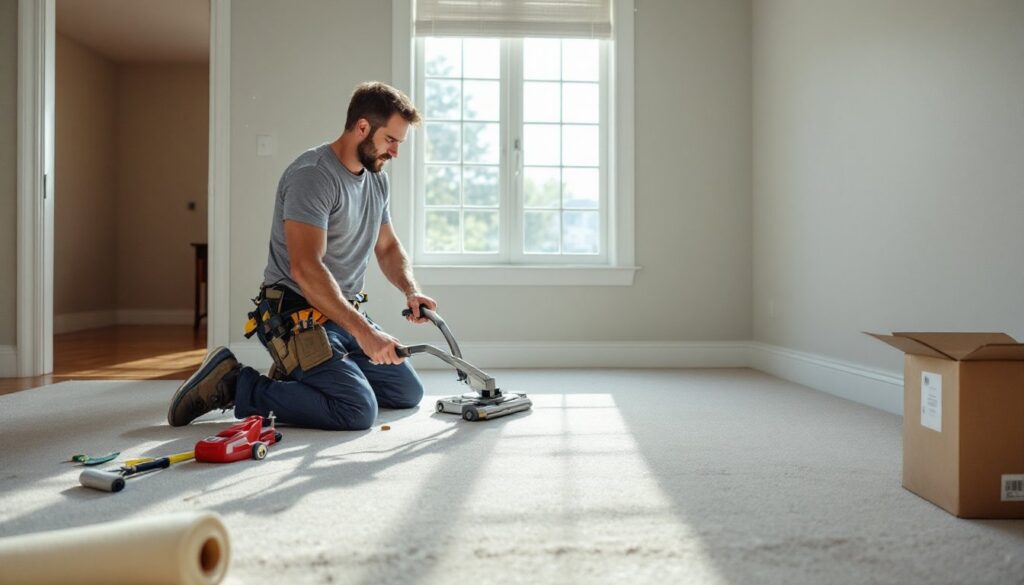

Shopping for new carpet involves more than picking out a color that matches the couch. Installation costs can swing wildly based on material choice, room layout, and what’s hiding beneath the old flooring. Homeowners planning a carpet project in 2026 should expect to spend anywhere from $3 to $11 per square foot installed, though that range expands quickly once prep work and extras enter the picture. Understanding where the money goes, and which variables push prices up or down, helps avoid sticker shock when the installer hands over the final invoice.
Table of Contents
ToggleKey Takeaways
- Carpet installation costs range from $3 to $11 per square foot nationally, with most homeowners paying $6 to $8 per square foot for mid-grade carpet and standard labor.
- Materials typically account for 50–65 percent of the total cost, while labor covers 35–50 percent; understanding this breakdown helps you identify where to negotiate or cut costs.
- Fiber type significantly affects price and durability—nylon offers the best balance for residential use ($2–$5 per square foot), while polyester and olefin provide budget-friendly alternatives.
- Additional prep work such as subfloor repair, moisture barriers, old carpet removal, and transition strips can add $1–$5 per square foot to your final bill.
- Shopping off-season, buying carpet and pad separately, and choosing simpler styles can save 10–25 percent on carpet installation costs without sacrificing quality.
Average Carpet Installation Costs Nationwide
As of early 2026, national averages for carpet installation range from $3 to $11 per square foot, with most homeowners landing somewhere between $6 and $8 for mid-grade carpet and standard labor. That translates to roughly $1,500 to $2,000 for a typical 12×15-foot bedroom (180 square feet) and $2,500 to $4,500 for a 20×25-foot living room (500 square feet).
Budget-friendly polyester or olefin carpet with basic pad and straightforward installation can dip as low as $3 to $4 per square foot. Premium wool blends, dense nylon pile, or specialty patterns push the upper end toward $10 to $11 per square foot before factoring in complex layouts or extensive prep.
Regional labor rates play a significant role. Coastal metro areas and cities with high costs of living often see labor charges 20 to 30 percent above the national median, while rural markets in the Midwest and South may offer more competitive rates. Always collect at least three local quotes to establish a realistic baseline for the area.
Cost Breakdown: Materials vs. Labor
Carpet installation invoices typically split into two main line items: materials (carpet, pad, and supplies) and labor (removal, prep, and installation).
Materials usually account for 50 to 65 percent of the total. This includes:
- Carpet: $1 to $7 per square foot, depending on fiber type, density, and brand.
- Padding: $0.50 to $1.50 per square foot. Quality pad extends carpet life and improves comfort: don’t skimp here.
- Tack strips, adhesive, seaming tape: Typically bundled into the installer’s material quote, adding roughly $0.25 to $0.50 per square foot.
Labor covers 35 to 50 percent. Professional installers charge $1.50 to $4 per square foot for removal of old flooring, subfloor prep, cutting, seaming, stretching, and final trim. Hourly rates for licensed installers range from $40 to $75 per hour in most markets, though per-square-foot pricing is more common for residential jobs.
DIY installation can slash labor costs entirely, but carpet requires a power stretcher (rental runs about $50 per day), a knee kicker, seam roller, and carpet knife. Mis-stretched carpet ripples and wears unevenly, so first-timers should weigh the rental cost and learning curve against professional results.
Factors That Affect Your Final Price
Several variables shift carpet installation costs from the low end to the premium tier. Recognizing these upfront helps set realistic budgets and avoid mid-project surprises.
Carpet Type and Quality
Fiber type drives both material cost and longevity:
- Nylon: The workhorse of residential carpet. Durable, stain-resistant, and available in a wide range of styles. Expect $2 to $5 per square foot for quality nylon.
- Polyester: Softer underfoot and budget-friendly ($1.50 to $3 per square foot), but less resilient in high-traffic areas.
- Olefin (polypropylene): Moisture- and stain-resistant, ideal for basements. Usually $1 to $2.50 per square foot.
- Wool: Premium natural fiber with superior durability and feel. Prices start around $5 per square foot and climb quickly.
Pile density and height also matter. Low-pile Berber or loop styles cost less and wear well in hallways and stairs. Plush, high-pile frieze or shag looks luxurious but costs more and shows wear faster in busy zones. Twisted or textured styles hide footprints and vacuum marks better than smooth cuts.
Room Size and Layout Complexity
Square footage provides the baseline, but layout quirks add labor time and waste:
- Closets, alcoves, and odd angles require extra cuts and seams. Each seam introduces a potential weak point and increases labor by 15 to 25 percent.
- Stairs are labor-intensive. Installers charge $3 to $10 per step depending on carpet type and whether runners or full treads are used. Waterfall vs. cap-and-band styles affect both aesthetics and cost.
- Pattern matching: Geometric or floral patterns must align at seams, increasing waste. Budget an extra 10 to 15 percent in material for pattern repeat.
Open rectangular rooms are the installer’s favorite: hallways with multiple doorways and L-shaped living areas take longer and cost more per square foot.
Additional Services and Preparation Work
Most quotes assume a clean, dry subfloor in good condition. Reality often differs, and prep work adds up fast.
Old carpet and pad removal typically costs $1 to $2 per square foot if not included in the base quote. Disposal fees for hauling away debris can tack on another $50 to $150, depending on volume and local landfill rates.
Subfloor repair or replacement becomes necessary when water damage, rot, or uneven surfaces exist. Plywood or OSB sheathing runs $30 to $50 per 4×8 sheet, plus labor. If joists are compromised, the project shifts from cosmetic to structural, hire a licensed contractor and pull permits as required by local code.
Floor leveling with self-leveling compound costs $2 to $5 per square foot for moderate dips. Carpet tolerates minor imperfections better than hardwood or tile, but severe unevenness causes premature wear and visible ridges.
Moisture barriers are essential for basement installations or concrete slabs. Polyethylene sheeting adds $0.50 to $1 per square foot. Skipping this step invites mold and odor issues down the line.
Furniture moving isn’t always included. Some installers charge $50 to $150 to shift sofas, beds, and dressers. Empty the room beforehand if the quote excludes this service. Heavy items like pianos or entertainment centers often require separate moving professionals.
Transition strips and thresholds between carpet and tile, hardwood, or vinyl cost $3 to $8 per linear foot installed. Metal or wood strips prevent edges from fraying and reduce trip hazards. Don’t skip these at doorways or stair landings.
How to Save Money on Carpet Installation
Cutting costs without sacrificing quality requires strategic choices and a willingness to handle some tasks independently.
Shop off-season. Installers stay busiest in spring and early fall. Booking in late winter or mid-summer often yields 10 to 20 percent discounts on labor as crews fill gaps in the schedule.
Buy carpet and pad separately. Big-box retailers bundle materials and labor into one quote, but purchasing carpet from a wholesaler or during clearance sales and hiring an independent installer can save 15 to 25 percent. Verify the installer’s warranty covers customer-supplied materials.
Handle prep work. Removing old carpet, pulling tack strips, and disposing of debris yourself eliminates $1 to $2 per square foot in charges. Rent a dumpster if needed: a 10-yard bin runs $300 to $500 for a week and handles most single-room projects.
Choose simpler styles. Loop pile and Berber cost less than cut pile or frieze. Solid colors avoid pattern-matching waste. Low-pile options require less padding and install faster, reducing labor hours.
Get multiple quotes. Prices vary widely among local contractors and national chains. Collect at least three detailed estimates that itemize materials, labor, prep, and disposal. Beware of lowball bids that skip pad quality or subfloor inspection, those costs resurface as change orders.
Consider polyester or olefin. If the room sees light to moderate traffic, these fibers deliver acceptable performance at 30 to 40 percent below nylon prices. Reserve premium nylon or wool for high-traffic zones like living rooms and hallways.
Negotiate padding upgrades. Installers often carry basic 6-pound density pad as standard. Upgrading to 8-pound density costs an extra $0.50 per square foot but extends carpet life by years and improves underfoot comfort, money well spent if keeping the carpet long-term.
Finally, check recent pricing trends on home renovation cost guides and compare against contractor project estimates to ensure quotes align with current market rates. Verify installer credentials, insurance, and references before signing contracts. Quality installation pays dividends in durability and appearance: cutting corners on labor rarely ends well.