
The modern farmhouse living room balances rustic warmth with clean, contemporary lines, a combination that’s practical, livable, and easier to pull off than you might think. It’s not about recreating a Pinterest board: it’s about choosing the right materials, proportions, and finishes to make a space feel both collected and intentional. Whether you’re starting from scratch or reworking what you’ve got, these ideas focus on the structural and finish choices that define the style, from shiplap installation to furniture scale and lighting placement.
Table of Contents
ToggleKey Takeaways
- Modern farmhouse living room design balances rustic materials like shiplap and wood beams with clean-lined furniture and neutral tones for an intentional, lived-in aesthetic.
- Choose a soft white or warm gray wall color (like Benjamin Moore’s Simply White or Sherwin-Williams’ Alabaster) paired with slightly brighter white trim to create subtle contrast while maintaining an airy feel.
- Invest in substantial furniture pieces with proper scale—a deep-seat sofa (40″ minimum), chunky wood coffee tables, and mixed-material accent chairs—that ground the room without ornamentation.
- Layer multiple textures through natural-fiber textiles, varied wood tones, matte metal accents, and architectural details like board-and-batten or wainscoting to prevent neutral spaces from feeling flat.
- Select lighting fixtures that blend rustic and contemporary elements, such as geometric pendants with wood accents or candelabra-style fixtures in matte black, sized appropriately for your room dimensions.
- Keep accessories minimal and curated—oversized mirrors, simple wall art, real plants, and functional decor like woven baskets—allowing texture and architectural details to be the true focal points.
What Defines the Modern Farmhouse Living Room Style?
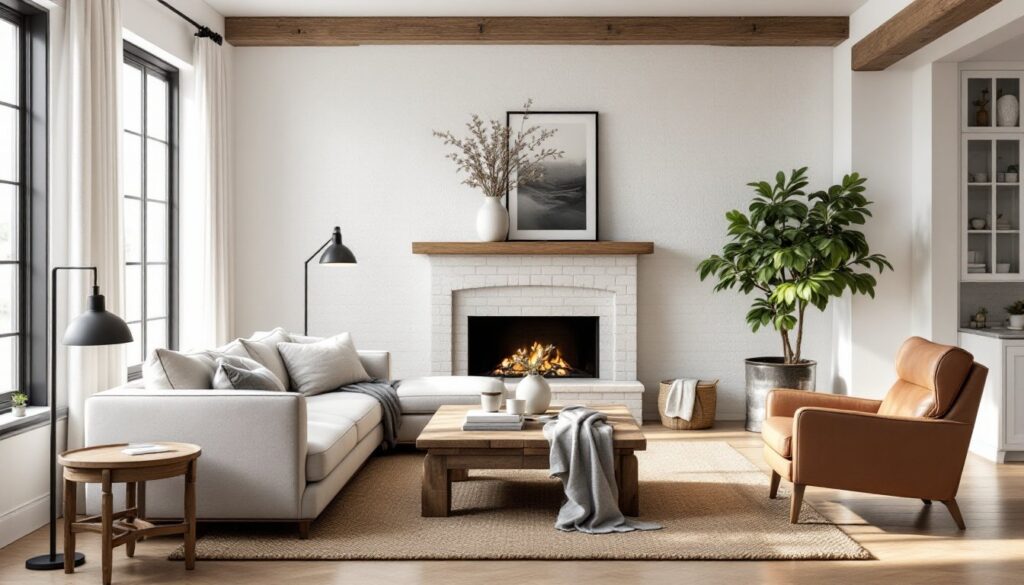
Modern farmhouse isn’t strictly traditional farmhouse and it’s not minimalist modern, it sits in the middle. The style mixes reclaimed or rustic materials (wood beams, shiplap, barn doors) with streamlined furniture and a neutral color palette. Think exposed ceiling joists paired with a low-profile sectional, or a sliding barn door on modern track hardware.
Key characteristics include:
- Natural wood tones: White oak, walnut, or reclaimed pine in flooring, beams, or accent walls
- Clean-lined furniture: Pieces with simple silhouettes, minimal ornamentation
- Textural contrast: Linen, jute, metal, and weathered wood in the same room
- Architectural details: Board-and-batten walls, shiplap, exposed framing, or coffered ceilings
- Edited accessories: Fewer, larger pieces rather than cluttered collections
If you’re adding architectural details, remember that shiplap installation typically uses ¼” to ½” thick pine or MDF boards with a nickel-gap (about ⅛”) between each plank. Secure them to studs with a brad nailer and 18-gauge nails. For board-and-batten, use 1×4 or 1×6 boards (actual dimensions ¾” × 3½” or ¾” × 5½”) spaced 12″ to 18″ on center. Both techniques require a flat, primed wall and proper fastening into studs or blocking, not just drywall.
Choosing the Perfect Color Palette for Your Modern Farmhouse Living Room
The palette anchors everything. Modern farmhouse leans heavily on whites, soft grays, and warm neutrals, with natural wood tones as the contrasting element.
Wall color is typically a soft white or warm gray. Popular choices include Benjamin Moore’s Simply White (OC-117), Sherwin-Williams’ Alabaster (SW 7008), or Accessible Beige (SW 7036). These shades have enough warmth to prevent the sterile look you’d get with a cool, stark white. One gallon covers roughly 350–400 square feet, so a standard 12′ × 15′ living room with 8′ ceilings needs about 1.5 gallons for two coats.
Trim and millwork often get painted in a slightly brighter white (such as Sherwin-Williams’ Pure White or Benjamin Moore’s Chantilly Lace) to create subtle contrast against the walls. Use a satin or semi-gloss finish on trim for durability and easier cleaning.
Accent colors come from natural materials, not paint. Think the honey tones of white oak flooring, the gray of a stone fireplace surround, or the black of metal light fixtures and window frames. If you do want a painted accent, consider a deep charcoal, navy, or forest green on a single focal wall or built-in shelving. Keep it to one surface to maintain the airy feel.
Ceiling treatment: Many modern farmhouse spaces use white or off-white on ceilings, but if you have exposed beams, consider leaving them natural or staining them a few shades darker than your flooring for contrast. If beams are structural (actual 4×8 or 6×10 dimensional lumber), consult a structural engineer before modifying or cutting into them.
Essential Furniture Pieces That Anchor the Look
Furniture in a modern farmhouse living room should feel substantial but not fussy. Scale matters, pieces that are too delicate won’t balance the architectural weight of wood and texture.
Sofa: Look for a deep-seat sofa (at least 40″ deep) with clean arms, track arms, English roll arms, or simple square arms work. Upholstery should be durable: linen, cotton-linen blends, or performance fabrics in ivory, oatmeal, or light gray. Avoid overly tufted or ornate styles. A standard 84″ to 96″ three-seater works in most living rooms: measure your space and leave at least 18″ of clearance for walkways.
Coffee table: Choose a solid wood or reclaimed wood table with a chunky profile, think 2″ thick tops, visible joinery, or a trestle base. Dimensions typically run 48″ to 60″ long and 18″ to 20″ tall. The table should sit about 14″ to 18″ from the sofa edge. Metal bases or mixed-material designs (wood top with steel legs) add the “modern” half of the equation.
Seating: Add one or two accent chairs in leather, linen, or a textured weave. Wingback chairs, slipper chairs, or simple armchairs all work. Don’t match them exactly to the sofa, variety in texture and tone adds depth.
Storage and display: A reclaimed wood console or sideboard offers concealed storage and a surface for styling. Open shelving or a bookcase in natural wood or painted white keeps things functional. If you’re building custom built-ins, use ¾” plywood for the carcass and face it with 1×2 or 1×3 trim. Paint-grade maple plywood is a cost-effective choice if you’re painting: for stain-grade, use matching hardwood veneer ply.
Avoid furniture with too much ornamentation, no carved legs, heavy scrollwork, or brocade upholstery. Proportions should feel grounded and sturdy. Platforms showcasing various modern home decor trends often highlight these balanced furniture arrangements.
Mixing Textures and Materials for Authentic Farmhouse Charm
Texture is what prevents a neutral room from feeling flat. The modern farmhouse look depends on layering multiple materials and finishes in a single space.
Textiles: Layer woven, natural-fiber textiles, linen throw pillows, a chunky knit blanket, a jute or sisal rug. Avoid synthetic-looking fabrics. For area rugs, natural fiber rugs (jute, sisal, seagrass) measure around 8′ × 10′ or 9′ × 12′ for most living rooms. These are durable but can feel scratchy underfoot, so many designers layer a softer wool or cotton rug on top or use a rug pad for cushioning.
Wood finishes: Mix wood tones, don’t match everything. A honey-toned oak floor pairs well with darker walnut furniture or weathered gray reclaimed wood accents. If installing new flooring, engineered hardwood (¾” thick with a 3–6mm wear layer) is stable and can be installed over concrete or radiant heat. Solid hardwood (¾” × 2¼” or wider planks) requires nailing into a wood subfloor and needs acclimation time (typically 7 days in the room before install).
Metal accents: Introduce matte black, oil-rubbed bronze, or brushed steel through hardware, light fixtures, or a metal-framed mirror. Mixing metals is acceptable as long as the finishes share a similar undertone (warm or cool). Avoid shiny chrome or polished brass unless you’re intentionally leaning into a more eclectic style.
Stone or brick: A fireplace surround in stacked stone, limestone, or painted brick adds another textural layer. If you’re updating an existing brick fireplace, whitewashing or limewashing (using diluted white latex paint or a specialized lime-based product) softens the look without fully obscuring the texture. Test on an inconspicuous area first: limewash can be difficult to remove.
Wall treatments: Consider board-and-batten, shiplap, or a simple chair rail with beadboard wainscoting below. These add dimension and visual interest. Most wainscoting caps out at 32″ to 36″ above the finished floor. Use a level and mark stud locations before fastening.
Lighting Fixtures That Blend Rustic and Contemporary Elements
Lighting in a modern farmhouse space should feel intentional, not purely decorative, not purely utilitarian, but both.
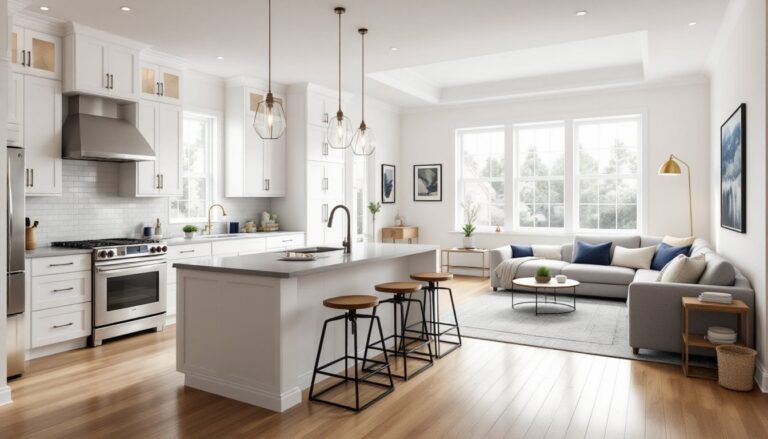
Chandeliers and pendants: Look for fixtures that mix materials, wood and metal, metal and glass, or wire cage designs with Edison-style bulbs. A wagon wheel chandelier leans too rustic: a sleek drum pendant leans too modern. The sweet spot is something like a candelabra-style fixture in matte black or a geometric pendant with a wood accent.
Size matters. For a chandelier over a seating area or entryway, use this rule of thumb: add the room’s length and width in feet, then convert to inches for the fixture diameter. A 12′ × 15′ room = 27″ diameter fixture. Hang it 30″ to 36″ above a coffee table, or 7′ above finished floor in an open area.
Sconces and task lighting: Swing-arm sconces in oil-rubbed bronze or matte black work well flanking a fireplace or beside built-in shelving. Install boxes at 60″ to 66″ above the finished floor (centered at eye level when standing). If you’re adding new electrical boxes, they need to fasten to studs or blocking, not just drywall. Consult local code (most residential follows NEC guidelines) and consider hiring a licensed electrician if you’re not comfortable working with live circuits. Always turn off power at the breaker and test with a voltage tester before touching any wires.
Floor and table lamps: Use these for ambient fill light. Choose lamps with simple bases, turned wood, ceramic, or metal, and linen or burlap drum shades. Avoid overly ornate bases or fussy shades. Interior design galleries on platforms like Houzz feature hundreds of examples of modern farmhouse lighting arrangements.
Dimmer switches: Install dimmers on overhead fixtures to control mood and brightness. Most LED bulbs are dimmable, but verify compatibility with your dimmer switch to avoid flickering. A standard single-pole dimmer costs around $15–$30 and takes about 15 minutes to swap out (again, power off at the breaker first).
Finishing Touches: Decor and Accessories That Complete the Space
Accessories bring personality, but restraint is key. The modern farmhouse aesthetic favors curated over cluttered.
Wall decor: Use large-scale pieces, a single oversized mirror, a piece of framed vintage artwork, or a gallery wall with matching frames (all black or all natural wood). Shiplap or board-and-batten walls often don’t need much decor: the texture is the feature. If you do hang art, use a stud finder and anchors rated for the weight of the piece. Standard drywall anchors hold 20–50 lbs: toggle bolts hold more. For heavy mirrors or shelving, fasten directly into studs.
Plants: Real greenery softens hard surfaces. Use simple containers, galvanized metal, ceramic, or woven baskets. Fiddle-leaf figs, rubber plants, or olive trees work well in corners. Smaller plants (pothos, snake plants) suit shelving. If natural light is limited, consider grow lights or stick to low-light varieties.
Textiles: Layer throw blankets and pillows, but keep the palette cohesive, creams, taupes, soft grays, with maybe one accent color or pattern (ticking stripe, buffalo check, or a muted plaid). Linen and cotton are more authentic than polyester.
Functional decor: Baskets (woven seagrass or wire) for storage, a wooden tray on the coffee table, a ceramic vase with dried stems or fresh-cut branches. These serve a purpose and look intentional, not just decorative.
Books and objects: Stack a few hardcover books (remove dust jackets for a cleaner look), add a small sculptural object, or display a vintage find. Don’t fill every surface, negative space is part of the design. Inspiration from farmhouse living room designs often shows this restraint in action.
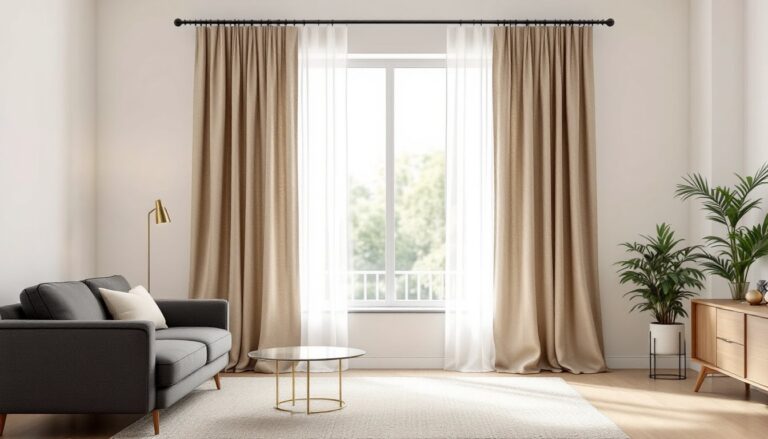
Window treatments: Use simple linen or cotton curtains in white or a soft neutral. Hang them high (just below the ceiling) and wide (extending 6″ to 12″ beyond the window frame on each side) to make windows look larger. Use a 1⅜” or 1⅝” diameter curtain rod in matte black or oil-rubbed bronze. If privacy isn’t an issue, consider leaving windows bare or using only a roman shade in a natural fiber.
Conclusion
Building a modern farmhouse living room comes down to material choices, proportion, and restraint. Focus on natural textures, clean-lined furniture, and architectural details that add character without overwhelming the space. Whether you’re installing shiplap, selecting a coffee table, or wiring a new pendant, each decision should balance rustic warmth with contemporary simplicity. Take your time with prep work, measure twice, and don’t skip the details, they’re what make the style feel authentic and lived-in.